The characteristics of distributed fiber optic temperature sensing - high precision, long-distance transmission, real-time response, electromagnetic immunity and intrinsic safety - have carried it into four broad fields of application. The scenarios below show the range.
Power systems. Cable temperature monitoring watches power cables in real time to prevent overheating fires and insulation damage; transformer temperature monitoring keeps the grid's key equipment within its safe operating range - delivered today by power cable DTS systems and transformer monitoring solutions.
Transportation. In tunnels, the sensing fiber detects temperature changes and triggers the alarm system at the first sign of fire; in metros, it monitors the heat generated by cables and equipment in operation, preventing accidents in the most crowded of underground environments.
Water conservancy. Dam temperature monitoring protects structural safety by revealing temperature-induced stress and anomalies; reservoir water temperature monitoring supports ecological management and water quality protection with continuous distributed data.
Industry. In chemical production, pipeline temperature monitoring ensures safe, stable processes and product quality; in steel smelting, the technology tracks melting temperatures and furnace body heat distribution to support process control and efficiency.
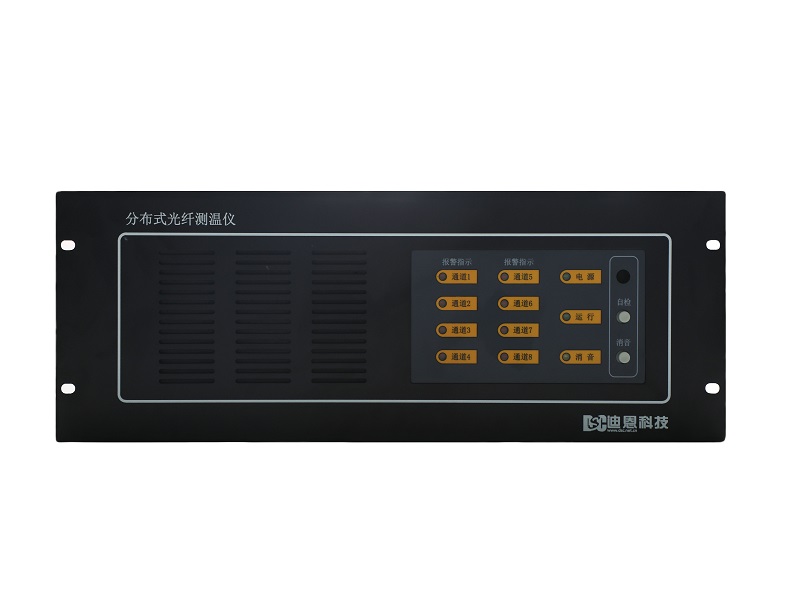
Across all four fields the value proposition is identical: complete coverage, early warning, no powered components in the field. DSC supplies DTS platforms for each scenario - contact us to match a system to yours.

