The distributed fiber optic temperature sensing host is the core component of the whole system, responsible for data processing, temperature display, storage and alarm. Here is what is inside it and what it does.
Host composition. The light source provides pulsed light to excite the Raman scattering effect in the fiber. The fiber wavelength division multiplexing system - a 1×3 bidirectional coupler with filters - separates and detects the scattered light of different wavelengths. The optical reception and amplification module, built around an avalanche photodiode (APD) with tail fiber and preamplifier plus a high-gain, wideband, low-noise amplifier, receives and amplifies the scatter signal. And the data processing unit converts the scatter signals into temperature information with storage, display and alarm handling.
Host functions. Data processing and storage: real-time conversion of the received scatter into temperature data, with historical records for trend analysis and fault investigation. Temperature display: a screen or interface shows the temperature at every point along the fiber, giving an immediate visual picture of the monitored area. Alarm management: configurable thresholds trigger alarms and outputs to the site monitoring platform.
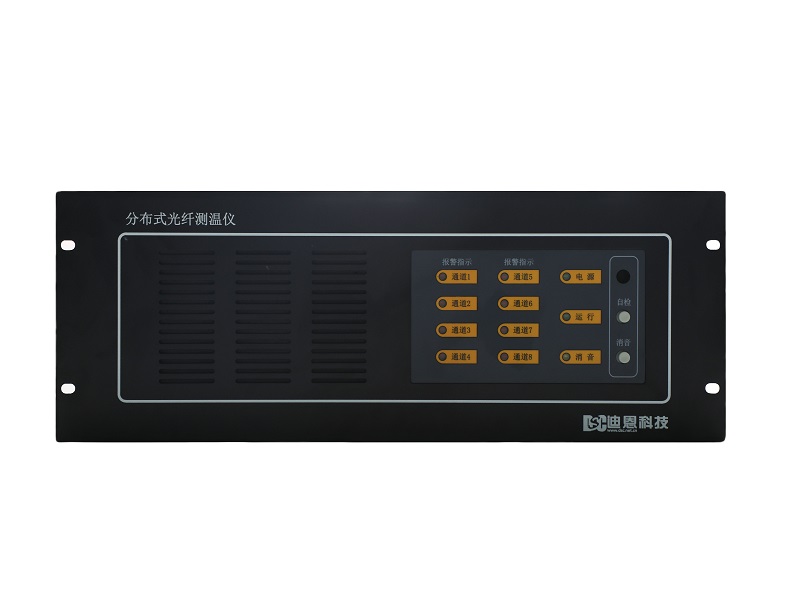
The host is where measurement quality is decided - which is why DSC engineers the full chain from DSC-DTSmK-nC host to monitoring software as one matched system. Contact DSC for host specifications and configuration.

