Chongqing University was the first education institution in China to research distributed fiber optic sensing mechanisms, and its work on distributed temperature sensing (DTS) systems produced notable research results. The parameters of its experimental system illustrate how DTS design choices work in practice.
System characteristics. Light source: the system uses a pulse-driven large optical cavity (LOC) semiconductor laser, chosen for stability and high output power - exactly what a DTS measurement chain demands. Optical pulse width: 70 ns, a key determinant of spatial resolution and measurement accuracy. Repetition frequency: 8 kHz, meaning 8,000 light pulses per second for fast temperature measurement along the fiber. Sensing fiber length: 1 km in the tested configuration, extendable in theory to longer distances for different application scenarios. Spatial resolution: 4 m over the 1 km sensing fiber - distinguishing temperature changes at every 4 m interval along the line.
What the research illustrates. The parameter set shows the trade-offs every DTS design makes: a 70 ns pulse sets the resolution floor, repetition frequency sets the measurement speed, and fiber length sets the coverage. Commercial systems such as DSC's DSC-DTSmK-nC push all three further through higher-performance components and advanced signal processing.
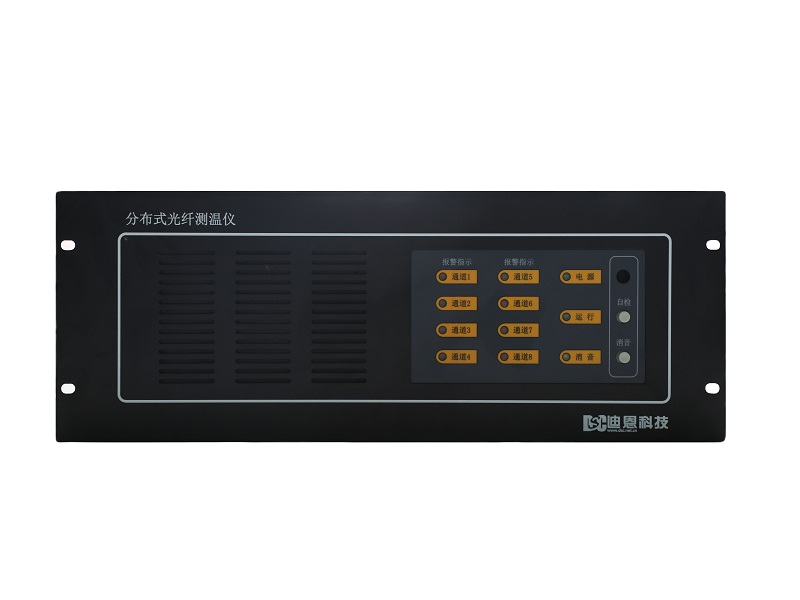
Academic research like this laid the groundwork for today's industrial deployments. Contact DSC to see how the matured technology performs on your project.

