Spatial resolution is a key technical indicator of a distributed fiber optic temperature sensing system: it determines the minimum distance along the fiber at which two adjacent temperature measurement points can be distinguished. Here is the definition and what drives it.
Definition. Spatial resolution is the minimum length of sensing fiber over which the system truthfully reflects the measured temperature or strain - the minimum sensing unit. It expresses the system's ability to resolve the temperature distribution in space.
Influencing factors. Optical pulse width: as the pulse travels through the sensing fiber, dispersion and attenuation broaden it; a narrower pulse broadens less, so adjacent points stay distinguishable and resolution improves - a wider pulse lowers resolution. Circuit bandwidth: if the bandwidth is too narrow to process the high-speed returning optical signal, the signal distorts and measurement errors lower the spatial resolution. Photodetector response time: slow detector response smears the timing that OTDR relies on, degrading spatial resolution in the same way.
How resolution is engineered. All three factors must be designed together - pulse width, detection bandwidth and detector speed form one matched chain. Typical industrial systems achieve 0.5 m to 4 m, and DSC publishes the exact figure for each DTS configuration.
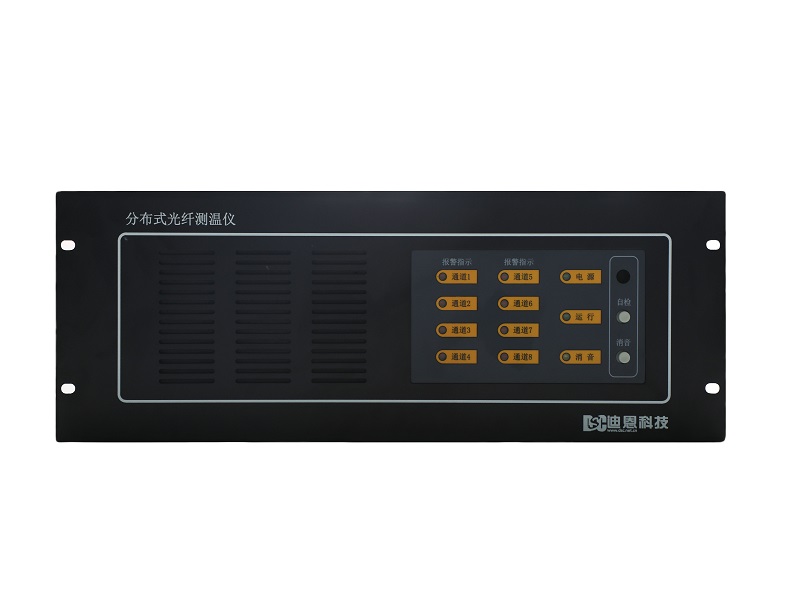
When comparing systems, always check spatial resolution against the fault size you actually need to detect - finer is not always necessary, but it is always priced. Contact DSC for the resolution your scenario requires.

