The photodetector response time is a key parameter in a distributed fiber optic temperature sensing (DTS) system, directly affecting measurement speed and real-time performance. Here is its definition and its effects.
Definition. Response time is the time from light hitting the detector surface to the output electrical signal reaching its stable value. It comprises rise time - the signal front rising from 10% to 90% of peak - and fall time, the trailing edge falling from 90% to 10%. The shorter the response time, the better the system's real-time performance.
Effect on spatial resolution. Light travels at a finite speed in the fiber: when detector response is too slow, the effective signal smears over a longer fiber distance, and adjacent temperature measurement points can no longer be distinguished - degrading spatial resolution, as covered in DSC's notes on spatial resolution factors.
Effect on measurement speed. The response time also directly limits how fast the system can acquire and process each measurement cycle, feeding into overall real-time performance.
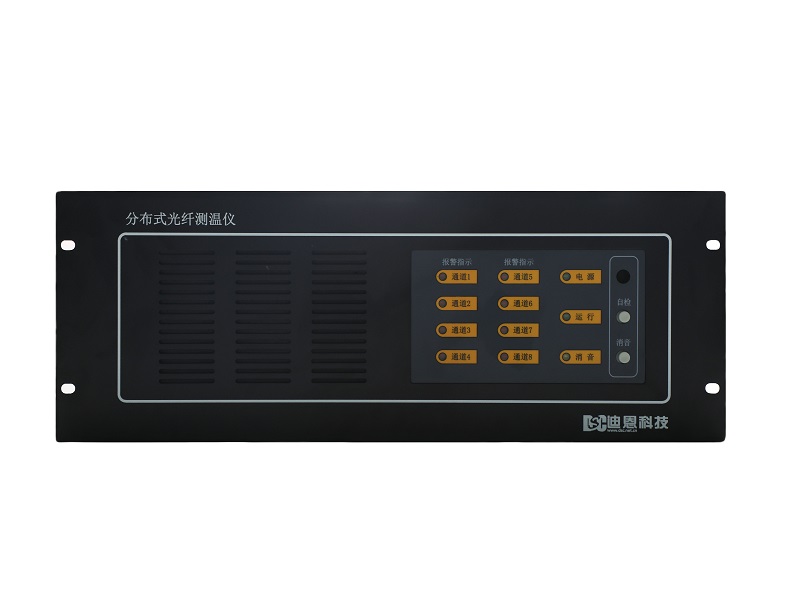
Engineering implication. Detector selection - avalanche photodiodes with tail-fiber coupling and low-noise wideband amplification - is where response time is won or lost. DSC's DTS hosts pair high-speed APD receivers with matched amplifiers to keep the whole chain fast. Contact DSC for the performance details of your configuration.

