The pyrolytic particle type electrical fire detector targets the earliest measurable signature of an electrical fire. Long before smoke appears or flames break out, overheating insulation, cables and components release a stream of microscopic pyrolysis particles into the surrounding air. By detecting these particles directly, the detector warns of a developing electrical fire at its true first stage - when the fault is still a hot spot, not a blaze.
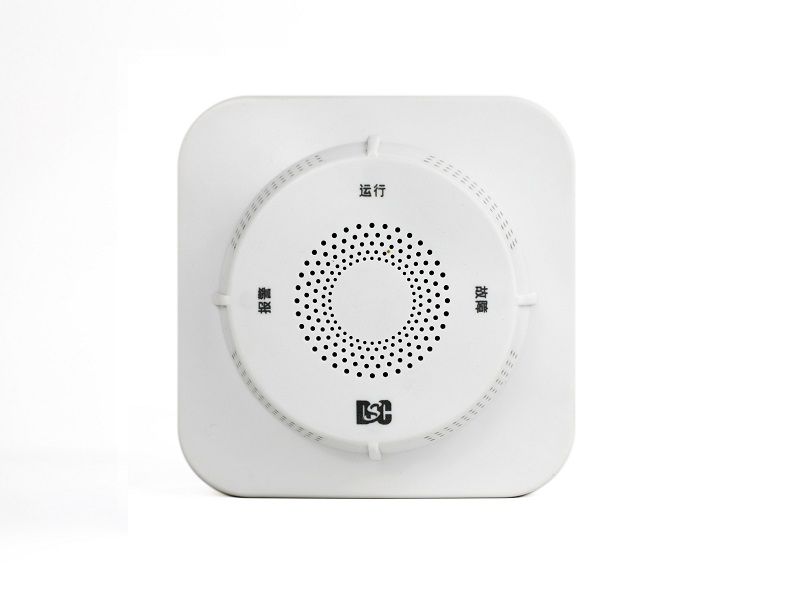
Working principle. The detector continuously draws ambient air through an internal sampling channel. A built-in filter removes dust and other inert particles so that only the fine pyrolysis particles generated by degraded insulation or overheated components reach the sensing chamber. When the particle concentration exceeds the preset threshold, the alarm circuit is triggered immediately, warning of the developing fault ahead of any visible smoke or flame.
Main performance features. The sensing chamber is tuned for very low particle concentrations, which produces extremely early warning capability. Advanced signal processing suppresses nuisance particles, keeping the alarm decision reliable in dusty environments. Installation follows standard electrical-practice practice, and the detector's self-check function simplifies routine maintenance.
Typical application scenarios. In power utilities the detector protects substations and distribution rooms; in enterprises, schools and public buildings it monitors cable trays, distribution boxes and switchgear; and in residential settings it guards household wiring and appliance circuits. It is frequently deployed together with the fire equipment power monitoring system so that both the fire signature and the supplying power circuit are watched at the same time.
System integration. Pyrolytic particle detectors output standard alarm and fault signals and connect to conventional fire panels or IoT monitoring platforms. In critical facilities such as substations, they are usually combined with a pyrolytic particle type electrical fire detector product line at the panel level and temperature monitoring of the same switchgear, giving operators two independent early-warning channels for electrical fire risk.

