The working principle of an aspirating smoke fire detector rests on two technologies: laser light-scattering detection and microprocessor-controlled signal analysis. Understanding the component chain - from the sampling pump to the alarm output - explains both why the detector is so sensitive and why it stays stable in environments that defeat ordinary smoke alarms.
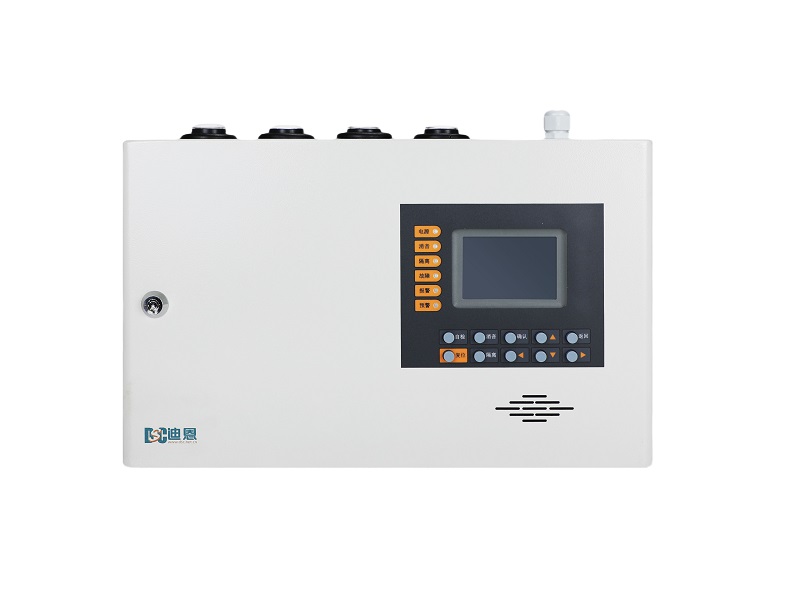
Component by component. Five parts form the detection chain. The aspirating pump continuously draws air from the protected area through the sampling pipe network. The filter assembly removes dust particles so they cannot interfere with measurement. Inside the laser detection chamber, a stable laser source and a highly sensitive optical receiver form the sensing core: smoke particles entering the chamber scatter the laser beam, and the receiver captures the scattered light. The control circuit processes the resulting electrical signal, computes the smoke concentration, and compares it with preset thresholds; the display circuit reports the concentration value and its alarm level in real time.
The detection sequence. Air sampling is continuous, not event-driven: the pump keeps the pipe network under constant flow, so a particle source anywhere along the pipe reaches the chamber within seconds. In the chamber, scattering converts the presence of smoke particles into light intensity; signal processing then turns intensity into a calibrated smoke value. Four graduated alarm levels are typical, allowing a staged response from an early "attention" signal through to a full fire alarm.
Why the design is so sensitive. Three design choices produce the very early warning. Active sampling brings the air to the sensor instead of relying on smoke to find it. A filtered, sealed chamber lets the laser work at extreme sensitivity without dust interference. And microprocessor analysis classifies the signal pattern, distinguishing genuine smoke signatures from transient nuisance particles.
The result in practice. The detector identifies fire risk at its incipient stage - often before visible smoke - which is exactly what data centers, archives, control rooms and transit tunnels require. For application-specific configurations, the aspirating smoke fire detector product line covers general facilities, while the aspirating smoke fire detection system for the power industry adds the sampling engineering needed for substations and power rooms.

