A disciplined design process for a fiber Bragg grating (FBG) sensing system runs through six stages - requirements, light source, grating design and fabrication, demodulation, integration and testing, and deployment with maintenance. Skipping stages is the usual reason systems underperform in the field; this article walks the full path from specification to a monitored structure.
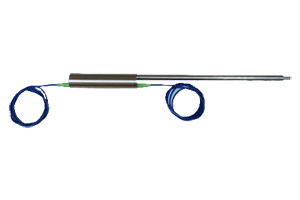
Stage 1: requirements analysis. Define the application scenario, the measurand (temperature, strain or another physical quantity) and the performance targets: precision, stability and response time. These requirements drive every later decision, from sensor count to interrogation bandwidth.
Stage 2: light source selection and modulation. Choose the source type - LED, laser diode or rare-earth-doped source - according to the bandwidth, output power and stability the measurement demands, then define the modulation scheme (pulsed or continuous-wave) that fits the interrogation architecture.
Stage 3: grating design and fabrication. Specify the center wavelength, reflectivity and bandwidth of each grating for its measurement role, then fabricate the gratings by phase-mask or point-by-point writing with strict process control, since fabrication quality decides sensor consistency across the array.
Stage 4: demodulation system design. Select the demodulation principle (filtering, interferometric or tunable-laser methods) and implement the optical and electronic processing chains. Algorithm design at this stage should prioritize real-time behavior, accuracy and stability, because demodulation performance bounds the whole system.
Stages 5 and 6: integration, testing, deployment. Integrate source, sensors and demodulation into the complete system and run functional, performance and stability tests against the Stage 1 requirements, debugging until the system meets its specification. After deployment, schedule periodic maintenance and calibration and plan upgrades as the application evolves. For a ready-engineered alternative to a ground-up design, the DSC-FBG-XA fiber Bragg grating analyzer and the FBG structural monitoring system provide validated hardware and software platforms that shorten this process for typical infrastructure projects.

