A fiber Bragg grating (FBG) sensing system is built from four classes of components - broadband light source, FBG sensors, signal demodulation and auxiliary optics - each with its own technology options. Knowing what each class contributes, and how the options differ, is the key to specifying or evaluating such a system.
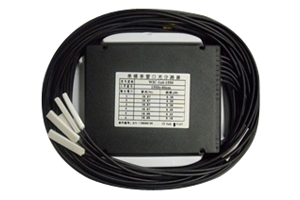
Broadband light source. The source supplies the optical energy for the entire system. Common types are LEDs, superluminescent diodes (SLD) and erbium-doped ASE sources; the erbium-doped source is widely favored for its advantages in temperature stability, power, bandwidth and service life. Whatever the type, the source needs wide, flat bandwidth and sufficient, stable power for multi-point interrogation.
FBG sensors. The sensing elements convert measurands such as temperature and strain into wavelength shifts of the reflected or transmitted light. Fiber Bragg gratings (FBG) and long-period gratings (LPG) are the two main families. FBG sensors are small, lightweight, immune to electromagnetic interference, highly sensitive, fast-responding and long-lived - properties that make them suitable for long-term safety monitoring in harsh environments where electronic sensors degrade.
Signal demodulation system. Demodulation converts the sensed wavelength shifts into readable electrical or digital signals, and it is the core of the system: its performance directly determines measurement precision and stability. The three principal methods each take a different route - filtering selects specific wavelengths for comparison; interferometry measures optical path or phase differences; and the tunable narrowband source method scans the source wavelength to match the grating reflections.
Auxiliary optical components. Fiber couplers distribute source light to multiple sensor lines or combine return signals toward the demodulator. Optical isolators permit one-way light passage, preventing feedback that would destabilize the source. Photodetectors convert the returning optical signals into electrical signals for demodulation processing. Together these parts complete the optical architecture. Practical implementations of this component stack include the DSC-FBG-XA fiber Bragg grating analyzer for interrogation and the FBG structural monitoring system for full infrastructure projects.

