A grating-based fiber optic temperature sensing system measures temperature through the thermo-optic response of a fiber Bragg grating: when temperature changes, both the grating period and the refractive index of the fiber change, shifting the reflected wavelength. Measuring that shift with high resolution turns any number of gratings along one fiber into a network of accurate, interference-free temperature sensors.
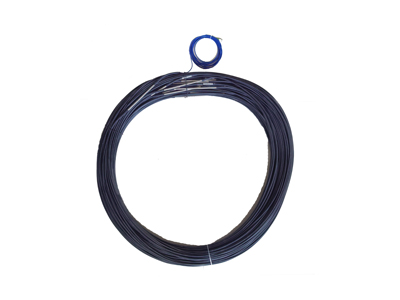
Basic principle. The resonance wavelength of an FBG depends on the grating period and on the effective refractive indices of the core and cladding modes - all of which vary with temperature through the thermo-optic effect. By monitoring the shift of the resonance wavelength, the system converts an optical change into a calibrated temperature value for each grating position, with no electrical signal anywhere in the sensing zone.
System composition. The system combines a stable light source (broadband or tunable), a sensing fiber carrying multiple serial FBGs - each grating acting as one independent temperature point - and a demodulation system that converts returned optical signals into electrical data for analysis and display.
Technical advantages. FBG temperature sensing offers high precision and rapid response; complete immunity to electromagnetic interference, since the sensor is non-metallic and generates no heat; transmission over distances of up to hundreds of kilometers for remote monitoring; and small, lightweight sensors that install easily in confined or complex spaces and need minimal maintenance.
Application fields. Chemical plants use FBG temperature systems to watch reactors and storage tanks; civil engineering applies them to bridges, tunnels and dams for structural health assessment through temperature behavior; the power industry monitors switchgear, cables and transformers to prevent overheating incidents; and aerospace relies on them for flight-safety temperature monitoring. In power applications the FBG-based switchgear temperature online monitoring system is the standard deployment, and the FBG structural monitoring system extends the same technology to civil structures.

