A fiber Bragg grating wireless sensing system combines two technologies that are individually mature and jointly powerful: FBG sensing for the measurement and wireless communication for the data path. The result is a monitoring system that keeps the precision and interference immunity of optical sensing while eliminating the cabling that makes remote-site deployments expensive.
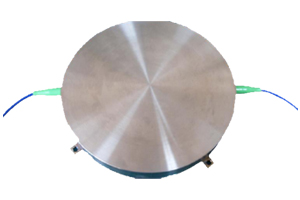
System overview. The FBG sensor is the core element: it senses external measurands such as temperature and strain through shifts of the Bragg wavelength. A demodulation module converts the returned optical signal into electrical data and computes the physical quantity. A wireless transmission module then sends the processed data to a remote monitoring center - the step that distinguishes this architecture from cabled FBG systems.
Wireless transmission design. The wireless module supports technologies such as Wi-Fi, Bluetooth and LoRa, selected for range, data rate and power budget. For long-lived unattended deployments the module is engineered for low power consumption and reliable long-distance transmission, with duty-cycled operation that keeps battery life in years rather than months.
Key advantages. The system inherits FBG precision and complete electromagnetic immunity, adds flexible networking without trenching and cabling, and enables real-time remote monitoring and data analysis from anywhere. These properties are decisive at sites where cabling is impractical: long spans, live infrastructure, remote terrain.
Applications and outlook. Structural health monitoring of bridges, tunnels and dams is the flagship application, with temperature and strain histories feeding condition assessment; industrial process monitoring in chemical, oil and power plants and environmental monitoring of terrain parameters follow closely, and aerospace programs use the same architecture for flight data acquisition. As IoT, big data and AI technologies continue to mature, FBG wireless sensing is moving toward smarter, better-networked configurations. For related cabled architectures and hardware, the DSC-FBG-XA fiber Bragg grating analyzer and the FBG structural monitoring system cover the interrogation and monitoring platform layers.

