Understanding a fiber Bragg grating sensor system means understanding both its internal composition and what it looks like as an installed product. This article describes the five functional blocks inside the system and the physical packaging you actually see in the field - instrument chassis, sensor packaging and the monitoring workstation.
Inside: five functional blocks. The light source, typically a broadband unit, generates the continuous interrogation signal. The FBG sensor is the core: the grating senses external quantities such as temperature and strain and encodes them as optical changes. The transmission fiber carries source light to the sensors and reflected or transmitted signals back to the system. The photoelectric conversion unit converts returning optical signals into electrical form. The signal processing unit amplifies, filters and analog-to-digital converts those signals into data ready for analysis and display. Finally, the display and control unit - a computer or embedded system - presents the processed data, controls system operation and provides the user interface.
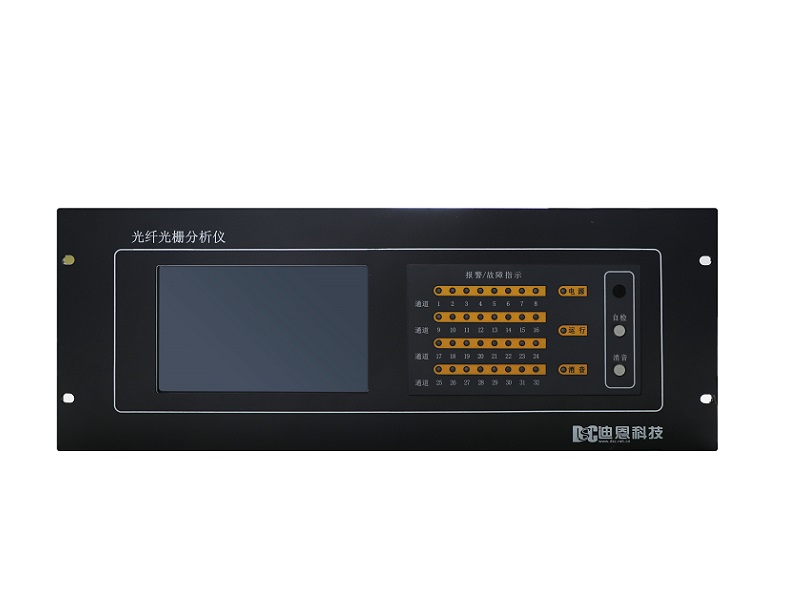
Outside: what the hardware looks like. Physical form varies by application scenario and manufacturer, but three packaging levels are standard. The interrogation instrument - the analyzer that houses the source, conversion and processing electronics - ships as a benchtop or 19-inch rack chassis with optical connectors and a front display. The sensing elements ship as engineered sensor packages: metal-cased temperature probes, strain gauges bonded to structures, or fiber lines with protective sheathing rated for the installation environment. The monitoring workstation is a standard computer running the platform software, in a control room or cabinet.
Matching packaging to environment. Packaging choices follow the installation: substation deployments use rack-mounted analyzers and electrically isolated sensor packages; civil-structure deployments use ruggedized, weatherproof sensor housings and long fiber runs; laboratory deployments use benchtop instruments. Production examples of this packaging logic include the DSC-FBG-XA fiber Bragg grating analyzer, the FBG-based switchgear temperature online monitoring system and the FBG structural monitoring system - each showing how the same five functional blocks are packaged for a different environment.

