Two problems recur in the demodulation process of fiber Bragg grating sensor systems: narrow bandwidth and poor stability. Both are solvable - with higher-power sources, smarter grating designs, multi-wavelength techniques, temperature compensation and advanced algorithms. This article walks the practical fixes for each.
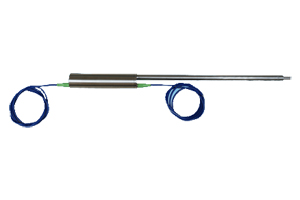
Fixing narrow bandwidth. Three levers widen the system's usable spectrum. Use a high-power broadband source: conventional edge-emitting LEDs (ELED) lack the power for wide interrogation, so laser diodes or other high-power broadband sources provide the optical energy that produces strong reflections and raises the demodulator's signal-to-noise ratio and sensitivity. Optimize the grating design: tuning the grating period and refractive-index modulation depth broadens the reflection spectrum, and specialty gratings - chirped FBGs or superstructure FBGs - achieve still wider reflection bands. Adopt multi-wavelength demodulation: detecting several wavelengths simultaneously extends the system's effective bandwidth, for example with a tunable laser source scanning across the grating reflections.
Fixing poor stability. Four measures steady the measurement. Use a stable light source: output power and wavelength drift propagate directly into readings, so source stability is the first specification to check. Optimize the grating packaging: packaging mechanics couple environmental disturbances into the grating, and well-designed packaging isolates them. Apply temperature compensation: measuring the ambient temperature and compensating in circuitry removes the dominant drift source from the strain or pressure channel. Adopt advanced demodulation algorithms: Kalman filtering and particle filtering reduce the impact of noise and interference on the demodulated result, improving both stability and accuracy.
The combined effect. Widening bandwidth and stabilizing the measurement chain are complementary: together they raise the number of multiplexable gratings, the measurement precision and the long-term confidence in unattended deployments. These fixes are engineered into production instruments - the DSC-FBG-XA fiber Bragg grating analyzer and the monitoring electronics of the FBG-based switchgear temperature online monitoring system - so that field systems inherit the bandwidth and stability by design rather than by tuning.

