The demodulation principle of a fiber Bragg grating sensor system is the translation layer between optics and data: it converts the wavelength information stored in each grating into readable electrical or digital signals. How that translation is performed - by wavelength, intensity or phase demodulation - decides the system's precision, cost and suitability for each application. This article compares the three techniques.
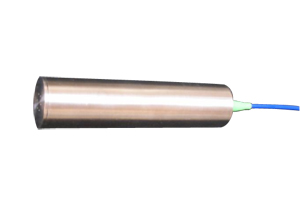
Principle overview. The FBG sensor converts an external parameter into a shift of its Bragg wavelength, through the grating's sensitivity to average refractive index and grating period. Demodulation detects the resulting strain or temperature change by measuring changes in the wavelength, intensity or phase of the reflected or transmitted light - each parameter offering a different balance of precision and hardware cost.
Wavelength demodulation. This technique measures the wavelength change directly, giving the highest accuracy and the stable, absolute encoding that wavelength offers. Its cost is hardware: precise wavelength measurement requires wavelength meters or spectrum analyzers - instrumentation that is justified for high-precision systems and built into dedicated interrogators such as the DSC-FBG-XA fiber Bragg grating analyzer.
Intensity demodulation. This technique measures intensity changes of the reflected or transmitted light, using simple, low-cost equipment. Its weakness is the same physics that wavelength encoding avoids: intensity depends on source stability, connector loss and fiber attenuation, so precision is comparatively limited and calibration drift is a live concern. It suits cost-sensitive applications with relaxed precision requirements.
Phase demodulation. This technique measures phase changes of the optical signal, typically through interferometric arrangements. It delivers very high sensitivity to small changes - valuable in acoustic, vibration and dynamic-strain applications - at the cost of more demanding optical stability and alignment.
Applications. The demodulation principle underlies every FBG deployment: power-industry temperature and anomaly monitoring of electrical equipment; dam monitoring of deformation and seepage parameters; and the multi-channel systems packaged as the FBG-based switchgear temperature online monitoring system and the FBG structural monitoring system. Choosing the right demodulation technique - and optimizing the demodulation process around it - is what achieves high-precision, high-sensitivity measurement of physical changes.

