The fiber Bragg grating sensor detection system is a passive-core sensing technology: a glass grating is the only component in the measurement zone, yet it delivers high-precision, real-time monitoring of temperature, stress, strain, pressure and vibration. This article presents the system overview - what each block does, how the measurement closes, and where the technology is deployed.
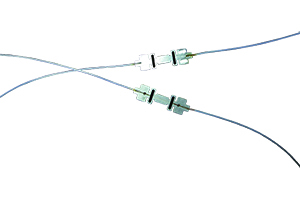
System overview. Four blocks form the detection system: the light source, the FBG sensors, the signal demodulation unit and the data processing and analysis software. The source provides the unmodulated carrier - typically a stable laser diode - whose light interrogates every grating in the array; the demodulation unit recovers wavelength shifts; the software turns shifts into monitoring records and alarms.
How the measurement works. The periodic refractive-index structure of each grating defines its reflection wavelength. When an external physical quantity acts on the grating, its period changes and the reflection shifts - with a defined relationship between shift and measurand. Measuring the shift therefore recovers the physical quantity, absolutely encoded and immune to intensity loss anywhere in the optical path.
What the technology delivers. The passive, all-glass sensing core gives high precision, high sensitivity and high reliability: no electronics in the field, complete electromagnetic immunity, and natural multiplexing of many gratings along one fiber. These properties explain why FBG detection systems displace conventional sensor networks wherever conditions are harsh or points are many.
Application fields. Aerospace monitors pressure, temperature and vibration of flight vehicles; civil engineering watches bridges, tunnels and dams; rail transit, power, water conservancy, highway and metro-tunnel projects, and oil and gas operations all run FBG detection in production - through systems such as the FBG structural monitoring system, the FBG-based switchgear temperature online monitoring system and the grating-array shaft and guide-rail deformation monitoring system, all built on the DSC-FBG-XA fiber Bragg grating analyzer. In medicine, FBG sensors support internal measurement of human tissue function. The technology's combination of precision and reliability keeps widening its research and application value.

