Understanding the structure and characteristics of linear heat detectors starts with their definition: a linear heat detector senses the physical or chemical phenomena that a fire produces along a continuous line, responding to the temperature - and/or rate of temperature rise - around that line. Two classic families dominate: the cable-type fixed-temperature detector and the air-tube differential detector. This article explains how each is built and how each works.
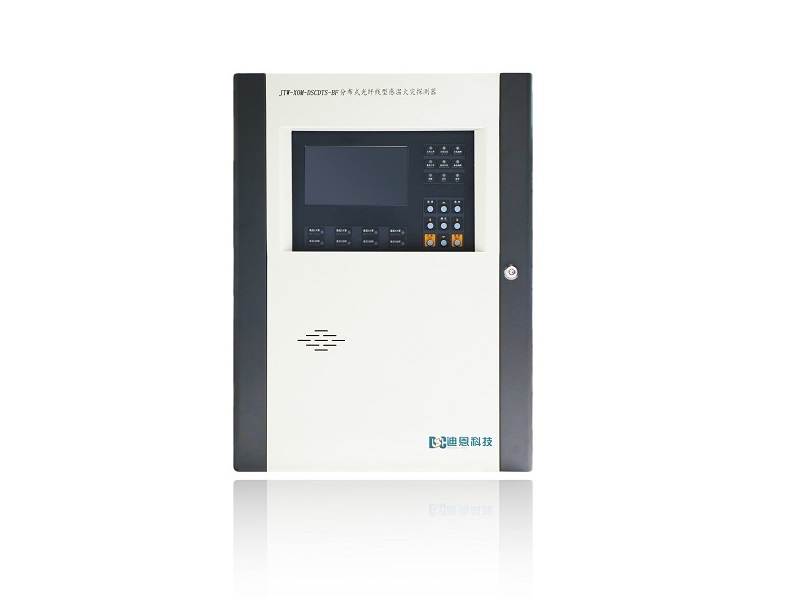
Cable-type fixed-temperature detector. This detector is essentially a thermal cable whose resistance changes with temperature. The cable consists of two elastic steel wires, thermosensitive insulating material, plastic wrapping tape and a plastic outer sheath. In normal monitoring state, the two steel wires remain insulated from each other. The fire alarm controller, transmission lines, junction boxes, the thermal cable and the terminal box together form an alarm circuit, and all circuits combine into a digital linear heat detection system. A tiny current flows through each thermal cable: when the temperature at any point along the cable - whether of the surrounding air or a contacting surface - reaches the preset threshold, the insulation between the wires fails at that point, the circuit registers the change and the alarm is triggered.
Air-tube differential detector. This detector responds to the rate of temperature rise. Its sensing element is a thin air tube laid through the protected area, with the membrane-box sensor and circuit part installed at the site or outside it. When the site temperature rises abruptly, the air inside the tube expands faster than the release orifice can vent; the pressure in the membrane box rises, pushing the diaphragm until the moving and fixed contacts close. The circuit completes and outputs the alarm signal to the fire alarm controller.
What the two families share - and how they differ. Both cover a continuous line rather than discrete points, which is why they serve tunnels, cable trays, warehouses and conveyor galleries. The cable type responds to absolute temperature - robust, simple, and suited to slow-developing fires; the air-tube type responds to the rate of rise - faster on fast-developing fires, and less affected by slow ambient drift. Modern fiber-based systems, such as the distributed fiber optic linear heat detector (3 km cabinet type) and the FBG linear heat detector, extend the same line-sensing concept with continuous temperature profiling and exact location reporting - the evolution path this product family follows for tunnels, metro lines and industrial sites.

