In spacecraft engineering, the fiber Bragg grating (FBG) sensing system is emerging as the monitoring technology that fits the environment: passive glass sensors that add negligible weight, survive vibration and temperature extremes, and carry no wires that radiate or pick up interference. This article explains how FBG systems monitor temperature, stress, strain and vibration across a space vehicle - and why aerospace programs keep expanding their use.
System overview. The spacecraft FBG system is a distributed sensing network built on the grating principle: multiple FBG sensors, connected through a fiber network, monitor the vehicle's physical parameters in real time during flight. The fiber network itself brings aerospace-critical properties - strong interference immunity and long-distance transmission with minimal cabling mass.
System composition. Three blocks form the onboard system. The FBG sensors, the core, measure optical frequency, phase and intensity parameters through grating reflection and diffraction effects. The fiber network links the sensors into a full-vehicle sensing mesh. The signal demodulation unit receives the optical returns and extracts the physical quantities for the onboard data system.
What the environment demands - and how FBG answers. Spacecraft monitoring has four hard constraints: minimal mass, minimal cabling, immunity to electromagnetic interference and survival across extreme thermal cycles. FBG sensing answers all four: the sensors are lightweight passive glass, one fiber replaces bundles of sensor wiring, the optical signal is immune to the vehicle's electromagnetic environment, and the silica sensors tolerate the thermal range that degrades electronic elements.
Typical onboard applications. Structural monitoring tracks strain and vibration across primary and secondary structures during launch and flight, feeding structural verification data. Thermal control verification uses distributed temperature arrays to confirm that thermal management performs as designed. Propulsion system monitoring watches fuel-tank pressure and temperature, keeping the propellant system within its safe operating envelope.
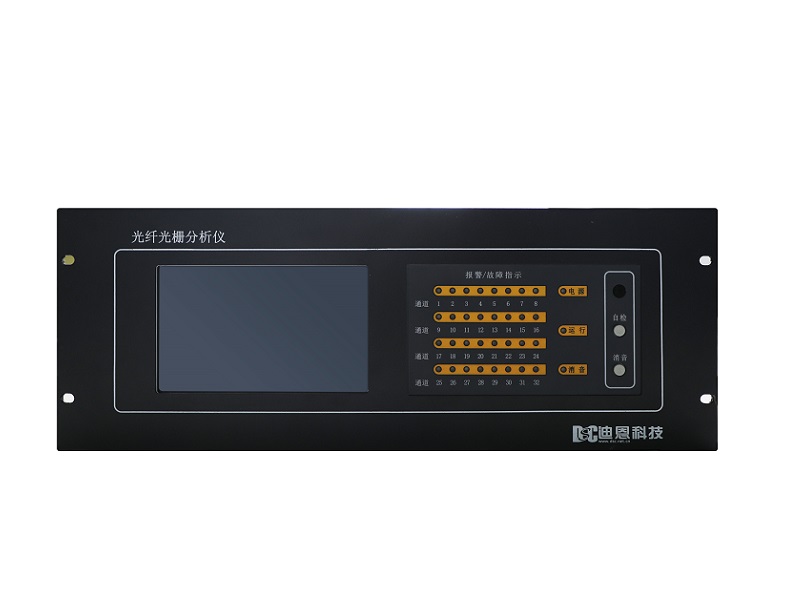
Development outlook. As space technology advances, monitoring requirements keep rising - and spacecraft FBG systems are heading toward higher sensitivity, higher resolution, wider measurement ranges and greater intelligence, with new materials and processes lifting sensor performance and reliability further. The same physical measurement chain proven onboard flies in terrestrial aerospace and infrastructure monitoring too, through systems such as the FBG structural monitoring system built on the DSC-FBG-XA fiber Bragg grating analyzer - a technology base with genuine cross-domain value for vehicle safety and stable operation.

