Every sensing technology has strengths and limits, and the distributed fiber Bragg grating sensing system is no exception. Knowing both sides - the genuine advantages and the real constraints - is what separates a well-matched deployment from an expensive mismatch. This article gives the balanced analysis.
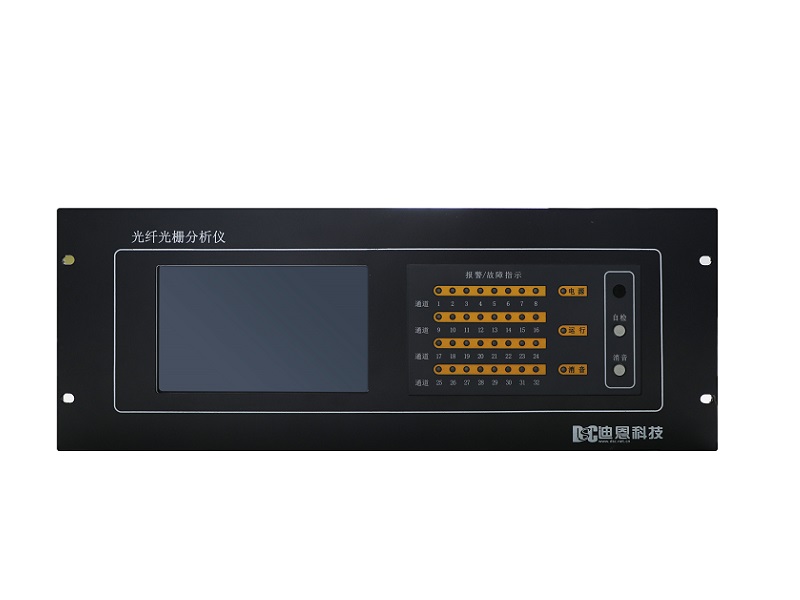
Advantage 1: distributed measurement capability. The system measures physical parameters continuously, in space and time, along the entire fiber length - comprehensive coverage of the monitored object that raises monitoring efficiency and leaves no unwatched gaps between discrete sensors.
Advantage 2: high sensitivity and precision. FBG sensors resolve minute physical changes, delivering monitoring results with the accuracy that structural assessment, process control and safety alarms actually require.
Advantage 3: electromagnetic immunity. The transmitted signal is light. No electromagnetic radiation disturbs the measurement, so the system runs stably in electromagnetically complex environments - substations, motor halls, welding floors - where conventional sensors false-alarm or fail.
Advantage 4: easy networking and expansion. FBG sensors multiplex and network naturally: large-scale sensor networks build on shared fiber, and monitoring points can be added as needs evolve, matching different application scenarios without redesigning the measurement chain.
The limitations. Four constraints deserve honest treatment. Cost: the interrogation hardware and engineered sensors carry a higher price than conventional point sensors, which matters for small, low-value installations. Installation complexity: fiber routing, grating allocation and protection demand professional engineering, so installation is not a DIY task. Transmission distance: despite strong long-distance capability, signal attenuation and loss still bound the practical fiber run. Data processing: distributed arrays generate large data volumes that require capable processing hardware and professional analysis software to turn into usable information.
The verdict. For dense-point, harsh-environment, long-run monitoring - infrastructure, energy, transport - the advantages decisively outweigh the constraints. For small, benign, budget-tight installations, simpler technologies often fit better. Matching the technology to the scenario is the decision, and production systems such as the FBG structural monitoring system and the DSC-FBG-XA fiber Bragg grating analyzer exist for the cases where the trade-off favors FBG.

