Where does a distributed fiber Bragg grating sensing system actually earn its keep? Wherever many measurement points, harsh conditions and long distances coexist: civil structures, oil and gas wells and pipelines, railways, power networks, telecom infrastructure and geohazard monitoring. This article walks the concrete application scenarios one field at a time.
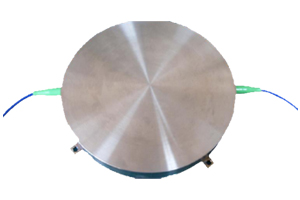
Structural health monitoring. On bridges, tunnels and dams, the distributed array tracks stress, strain and temperature along the whole structure, evaluating safety performance and exposing hidden hazards early. In buildings, the same network monitors deformation, stress distribution and vibration - data that informs design, construction and maintenance decisions alike.
Oil and gas exploration and development. Downhole, distributed FBG arrays monitor temperature and pressure inside the well, supporting production optimization and recovery efficiency. Along pipelines, the network detects leakage, deformation and third-party intrusion, keeping line operations safe across distances that defeat conventional instrumentation.
Transportation. Rail monitoring tracks trackbed strain and displacement, catching rail damage and deformation before derailment risk develops; bridge and tunnel structural health monitoring applies the same arrays to transportation infrastructure - production examples being the FBG linear heat detection system for tunnels and the FBG structural monitoring system.
Electric power and telecom. Power networks run distributed FBG monitoring on cables, switchgear and busbars - the FBG-based switchgear temperature online monitoring system being the standard deployment. In fiber communication, the same technology supports online quality control in cable production - monitoring attenuation and length parameters - and cable maintenance, locating fault points quickly to raise maintenance efficiency.
Geoscience and medicine. Geological applications include seismic monitoring and geohazard early warning, improving exploration efficiency and accuracy; in medicine, FBG sensors support internal measurement of human tissue function, feeding valuable data to medical research.
Across all these fields the pattern is identical: one passive fiber line, many points, no electronics in the field - and as technology and application scenarios keep expanding, the deployment footprint of distributed FBG sensing keeps growing with them.

