The analog linear cable-type heat detector combines a temperature-sensing cable with analog signal processing to monitor and precisely reflect temperature change across the protected area in real time. Unlike switching-type designs that only report threshold crossings, the analog approach measures continuously - which is what gives it its early-warning capability and diagnostic depth.
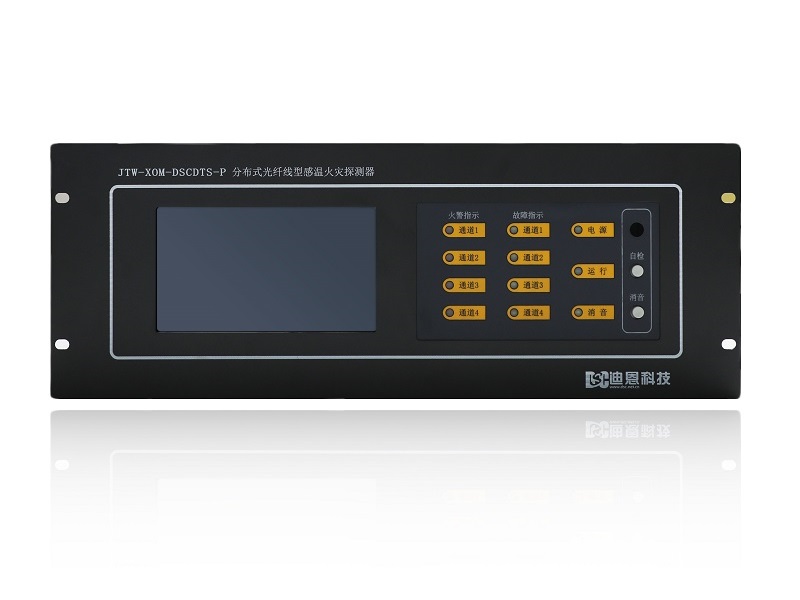
Composition. Two units form the detector. The analog sensing cable is typically built from four conductors, their outer layers insulated with special negative-temperature-coefficient thermosensitive material, pairwise shorted into two loops - a design that lets the cable sense environmental temperature change with high sensitivity. The cable microcomputer controller monitors the working state of the front-end detection cable and processes the analog signals arriving from the sensor.
Working principle. When the temperature in the protected area changes, the resistance of the monitoring loop changes measurably. The controller continuously samples the loop resistance of the front-end cable and compares it against the preset alarm values. When the measured change reaches the alarm condition, the controller sends an alarm signal to the downstream fire alarm control panel, completing the detection chain with a time-stamped, quantified reading rather than a simple on/off.
What analog measurement adds. Three practical benefits follow from continuous measurement. Earlier warning: resistance trends reveal abnormal heating before any threshold is crossed. Better discrimination: gradual ambient drift is distinguished from abrupt fault signatures, cutting nuisance alarms. Diagnostics: the controller's continuous view of loop resistance also exposes cable damage and wiring faults as maintenance information, not just as alarms.
Installation and maintenance notes. Installation must be performed by professionals to ensure correct connection and reliable operation. Cable routing and fixing methods deserve attention to avoid mechanical damage and environmentally induced faults, and periodic maintenance and inspection are key measures for long-term stable operation.
Position in the product family. The analog cable detector sits between switching-type cable designs and fully optical systems: for installations that outgrow its precision or distance limits, the fiber-based lines - such as the 2.5 km wall-mounted distributed fiber optic linear heat detector - provide the upgrade path. As it stands, the analog design delivers high precision, high stability and reliable fire detection, giving fire early warning and prevention solid technical support.

