The linear cable-type heat detector - commonly called temperature sensing cable - is an early fire detection device that watches environmental temperature change along its run. It serves power, steel, petrochemical, transportation, brewing, tobacco, mining and communication industries alike. This article explains its working principle, its resettable and non-resettable types, and its market position.
Working principle. The principle rests on temperature's effect on cable resistance: when the ambient temperature rises, the resistivity of the thermosensitive material inside the cable changes, triggering the alarm signal. The system comprises the sensing cable, the signal processing unit and the alarm output unit.
Non-resettable type. After an alarm, the sensing cable cannot be restored and must be replaced. It suits applications where cost sensitivity is low but fire detection precision requirements are high - the damaged cable itself documents the event location.
Resettable type. The resettable cable continues in service after an alarm, with no replacement needed. By signal-processing approach it divides into two sub-types. Switching multi-level cable detectors: the controller evaluates the cable's state against discrete alarm levels, combining simple hardware with graduated alarm thresholds. Analog cable detectors: the controller continuously measures the cable's electrical state and evaluates temperature trends, supporting earlier warning and richer diagnostics.
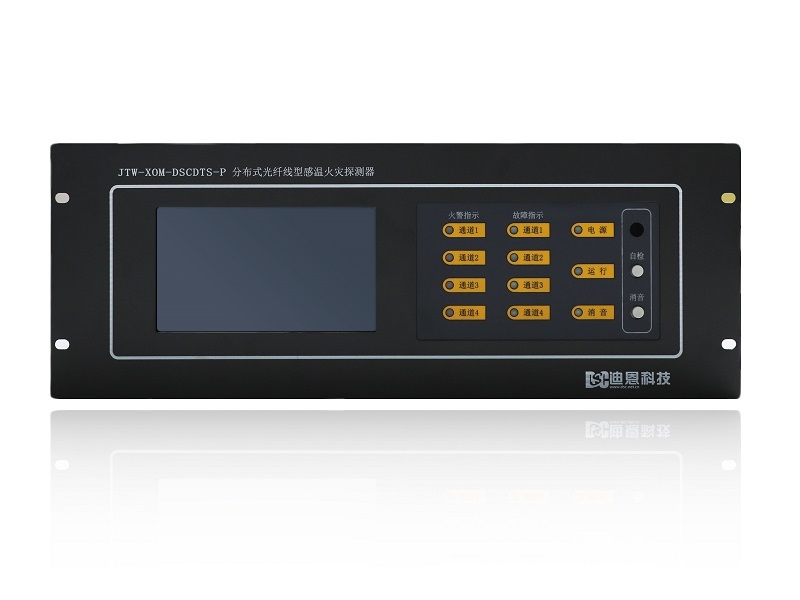
Where it fits. The cable-type detector's strengths - high sensitivity, strong adaptability, high reliability - fit continuous linear assets: cable trays, conveyor galleries, warehousing and process facilities. For installations demanding continuous temperature profiles, exact location and long coverage, its fiber-based successors - the 2.5 km wall-mounted distributed fiber optic linear heat detector and the FBG linear heat detector - extend the same line-sensing concept with richer data.
Price and market. Prices vary by brand, model and specification, and the market offers multiple detector families with competitive performance, price and reliability positions. As safety awareness rises year by year, demand for linear cable-type heat detection keeps growing - confirming its role as an important fire detection device that effectively prevents fire accidents and protects life and property across its industries.

