The distance settings of a linear heat fire detector decide whether it covers the protected space or merely decorates it: mounting height, detector spacing, wall clearance and emitter-receiver range all follow code requirements. This article consolidates the distance parameters and the environmental rules that surround them.
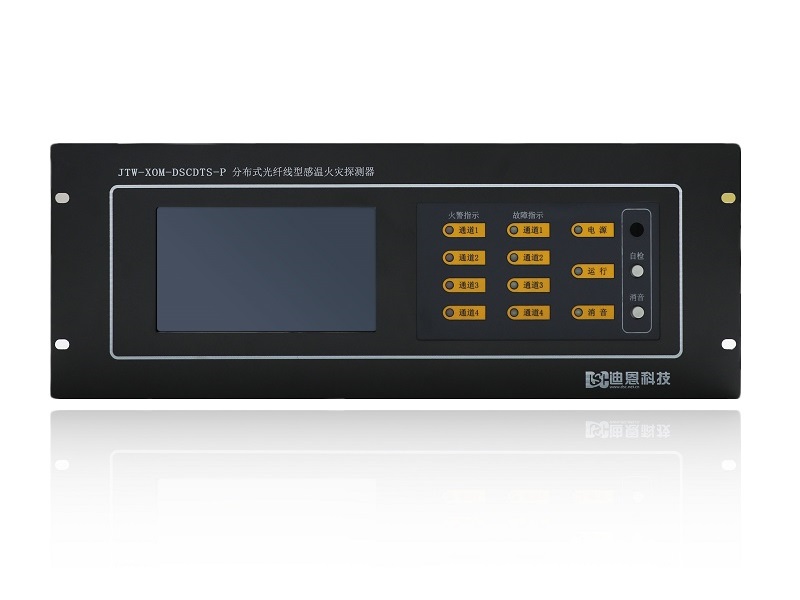
Mounting height. For ceiling-mounted installations, the distance between the linear heat fire detector and the ceiling should be about 0.1 m - close enough to catch the ceiling jet, clear enough to avoid mounting interference.
Detector spacing. For cable-type linear heat detectors, the horizontal distance between adjacent detectors should not exceed 5 m, preserving coverage and sensitivity; in specific sites such as cable tunnels, the spacing must not exceed 10 m. For distributed linear fiber optic heat detectors, the number of protected lanes should not exceed two, and spacing must ensure complete tunnel coverage with no detection blind zones.
Distance to walls. The distance from the detector to the wall should be about 1.0 to 1.5 m - too close to the wall and the detection effect suffers. For end walls, the detector-to-end-wall distance follows the same clearance logic.
Emitter-receiver distance. For beam-type smoke detectors - where this parameter also applies - the distance between the emitter and the receiver (or the reflector plate and the detector, for reflective models) should not exceed 100 m.
Other placement rules. Where the protected object is specific equipment, the sensing line runs along the equipment surface or nearby so that device temperature change is sensed accurately. And the modules connected to the linear heat detector should not be installed in permanently damp locations or places with large temperature swings, which degrade the detector's performance.
Summary. Distance setting for linear heat fire detectors requires weighing mounting position, spacing, fixing method, fiber protection and environmental requirements together - and in practice, setting these parameters against the building's actual conditions and fire-risk class is what ensures the detector's effectiveness and sensitivity. Production systems such as the 2.5 km wall-mounted linear heat detector ship with installation documentation that translates these rules into site-specific layouts.

