The Fiber Bragg Grating (FBG) linear heat fire detector detects fire through the temperature sensitivity of the fiber grating and the reflection principle of light: when the temperature around the grating changes, the wavelength of its reflected light shifts, and the detector measures that shift in real time - alarming when the temperature reaches the preset threshold. This article covers the features, the advantages and the honest limitations, so selection starts from facts.
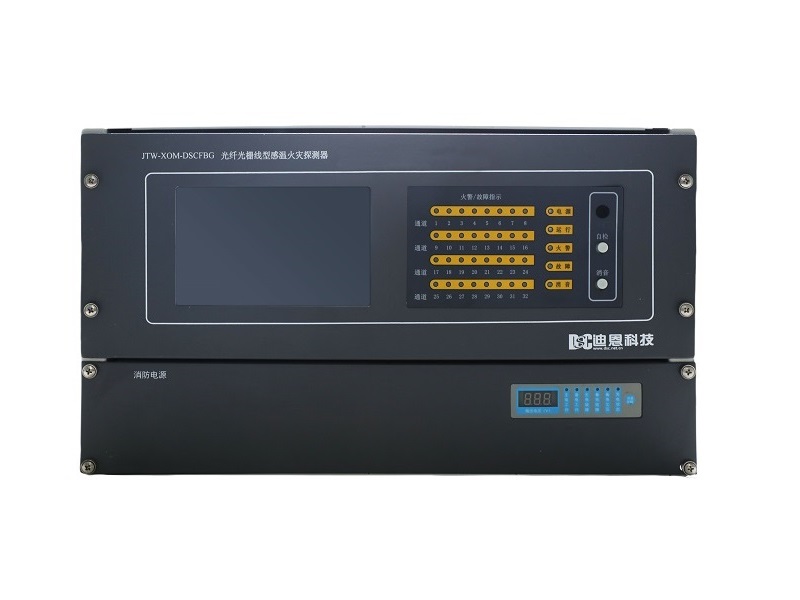
Main features. High precision: the FBG detector measures temperature highly accurately, detecting fire even under minute temperature changes. Long-distance monitoring: a single line covers long, narrow spaces - entire building zones or tunnels - for full-range fire detection. Maintenance-free operation: fiber sensing needs no frequent maintenance, cutting upkeep cost. High reliability: the all-optical chain keeps working in complex environments with few false or missed alarms. Flexibility: the sensing line routes wherever risk sits - along cable trays, tunnel crowns, tank perimeters.
Where it performs. The detector serves the linear-risk assets that defeat point detectors: cable tunnels and trays, metro and road tunnels, conveyor galleries, tank farms - deployed through systems such as the tunnel linear heat detection system (FBG) and the FBG switchgear temperature monitoring system for the electrical-room side.
The limitations, stated honestly. Design requires professional engineering for layout, installation, commissioning and maintenance - it is not a plug-and-play product. And in environments with severe pollution or strong vibration, some measurement error can appear, which argues for protective routing and periodic verification in those conditions.
Selection guidance. Choose the detector model and specification by the site's characteristics and requirements, follow the applicable installation and maintenance requirements, and the FBG linear heat detector delivers its design promise: an advanced fire detection device with high precision, long-distance monitoring, maintenance-free operation and high reliability, working at full value.

