The tunnel distributed fiber optic temperature measurement system is engineered for the tunnel environment: real-time temperature monitoring and fire early warning along the full tunnel length, from a single sensing line. This article covers the three-part composition, the OTDR-and-Raman principle, the system characteristics and what the deployment means for tunnel safety.
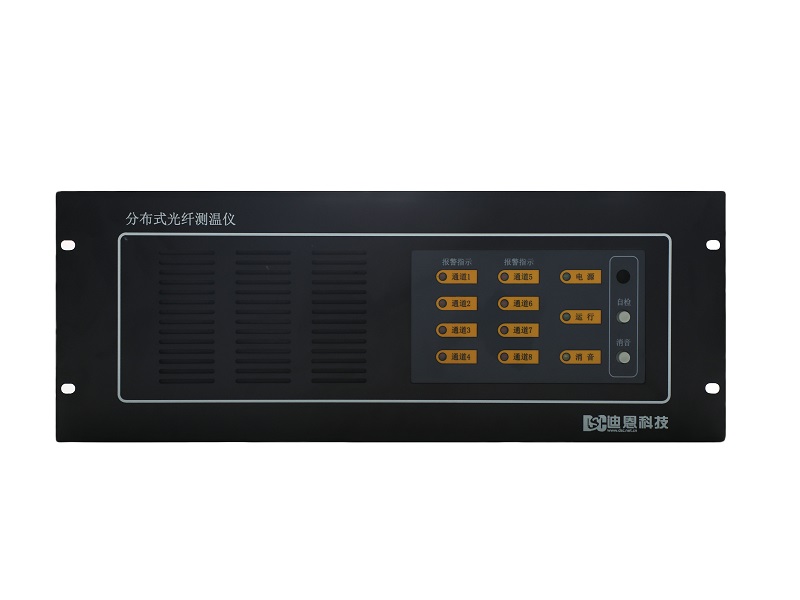
System composition. Three parts form the system. The sensing cable runs straight along the tunnel interior, monitoring the internal temperature online in real time. The distributed fiber temperature measurement host converts the signals returned by the sensing cable into corresponding temperature data. The monitoring center watches the host's data in real time and raises audible and visual alarms on dangerous values - the architecture packaged as the tunnel linear heat detection system (FBG) for grating-precision deployments.
Working principle. The system is based on optical time-domain reflectometry (OTDR) and the Raman scattering effect: a laser pulse travels down the fiber and interacts with the medium, producing backscattered Raman light. By analyzing the intensity ratio of the scattered components and their return times, the system obtains the temperature distribution along the tunnel in real time.
System characteristics. Continuous full-length coverage from one line - every meter of tunnel watched, no blind zones between detectors. Real-time response: temperature changes appear on the monitor as they develop. Precise positioning: the alarm reports where along the tunnel the event sits, cutting response dispatch time. Low false-alarm rate: the temperature-based measurement ignores the dust and vehicle effects that plague smoke detection in tunnels. Low maintenance cost: the passive fiber line keeps later-stage maintenance cheap, lowering the tunnel's operating cost.
System significance. Deploying the tunnel distributed fiber optic temperature measurement system matters for raising tunnel safety management and preventing fire and other safety incidents. It also advances tunnel monitoring toward intelligent, refined operation - strong protection for safe tunnel passage.

