The dense distributed fiber optic temperature measurement system is DTS taken to higher spatial resolution: the sensing cable is laid at higher density, delivering finer temperature detail for scenarios that need it - power cables, tunnels, metros and petrochemical equipment. This article covers the composition, the principle, the characteristics and a representative deployment case.
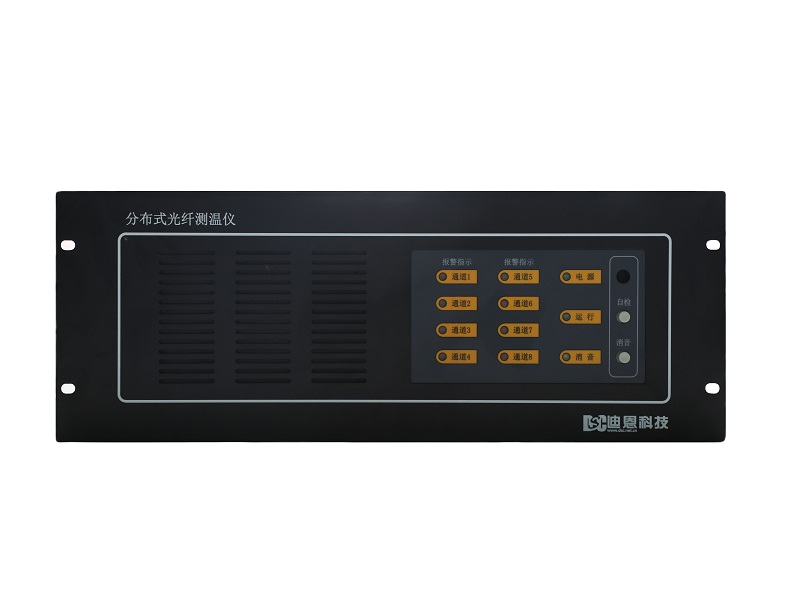
System composition. The main parts are the measurement host - responsible for data processing, temperature display, storage and alarm functions - and the sensing cable, which senses and transmits temperature information. In the dense configuration, the sensing cable is laid at higher density to achieve finer temperature monitoring. Auxiliary equipment - optical couplers, splitters and receivers - handles optical signal transmission, processing and analysis.
Working principle. The system is based on the fiber Raman scattering effect: temperature change at any point on the fiber alters the scattering characteristics there, and by measuring those changes the system recovers the temperature at each point. Higher laying density converts the same physics into finer spatial detail - more measurement positions per meter of asset.
Characteristics. High precision and high density distinguish the dense configuration, with the same interference immunity and passive-safety properties as all DTS systems: no electricity in the sensing path, immunity to electromagnetic fields, and long-distance coverage from one interrogation unit.
Case: bus duct monitoring in a high-rise commercial building. A dense distributed fiber temperature measurement system was applied to bus duct temperature monitoring in a high-rise commercial building. The system - measurement fiber plus measurement host - monitored the dense bus ducts in real time with early-warning mechanisms, raising energy-use efficiency, securing power supply safety, and improving management efficiency while cutting cost.
Summary. The dense distributed fiber optic temperature measurement system is a high-precision, high-density, interference-immune temperature monitoring technology for scenarios requiring fine temperature control - with the bus duct distributed optical fiber temperature measurement system as the production embodiment of the case above.

