The utility tunnel distributed fiber optic temperature measurement system serves the city's underground lifeline: the municipal utility corridor houses power cables, water, telecom and other utilities in one structure, and a fire or thermal event in it threatens everything at once. This article presents the system overview, composition, characteristics, and what the deployment means for corridor management.
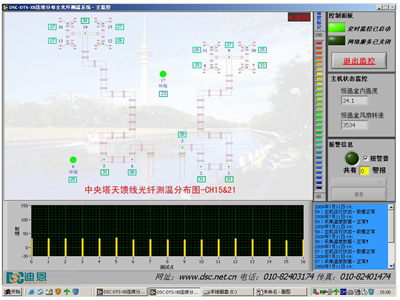
System overview. The system is a real-time, online, continuous temperature monitoring system. It uses the fiber Raman scattering principle combined with optical time-domain reflectometry (OTDR) positioning technology to measure and locate the temperature distribution of all equipment and facilities inside the corridor precisely. The system integrates computer, fiber communication, fiber sensing and optoelectronic control technologies, with corrosion resistance, high-temperature tolerance, interference immunity, compact structure, high precision and suitability for long-distance transmission as its properties.
System composition. The distributed fiber temperature measurement host is the core: it transmits pulsed laser signals, receives and processes the scattered light from the fiber, displays temperature in real time, and judges fire alarm or fault signals through its algorithms. The temperature-sensing cable is the sensor part, laid through the corridor along the utilities it protects - with dedicated deployments such as the cable-zone monitoring served by the switchgear DTS monitoring system architecture.
What the corridor deployment delivers. Continuous coverage of the full corridor length from one line - no blind zones between point detectors. Early warning of cable overheating, water ingress effects and fire precursors, with precise location so response teams know where to go. Low maintenance burden: the passive fiber line and modular host keep operating cost down across the corridor's decades of service.
Integration with smart-corridor systems. The system integrates with the corridor's other intelligent systems - the monitoring platform, the alarm system and the access and ventilation controls - realizing intelligent management of the utility corridor as one coordinated facility rather than a set of disconnected subsystems.
Summary. The utility tunnel distributed fiber optic temperature measurement system is an advanced, reliable temperature monitoring technology with distributed measurement, high precision, long-distance monitoring, strong interference immunity and intrinsic safety. Applied in municipal underground utility corridors, it significantly raises corridor safety, optimizes management efficiency, cuts maintenance cost and lifts the intelligent management level of the city's underground lifeline.

