In large public buildings such as shopping malls, exhibition centers and theaters, fire safety has to reconcile two conflicting demands: detect a fire in its earliest stage, yet never disrupt thousands of visitors with a false alarm. The Fiber Bragg Grating (FBG) linear heat detector fits this balance well. It watches temperature continuously along its entire route, reacts quickly to a genuine abnormal rise, and at the same time is far less prone to the dust-, steam- and airflow-related false alarms that plague smoke detection in busy atriums and catering zones.
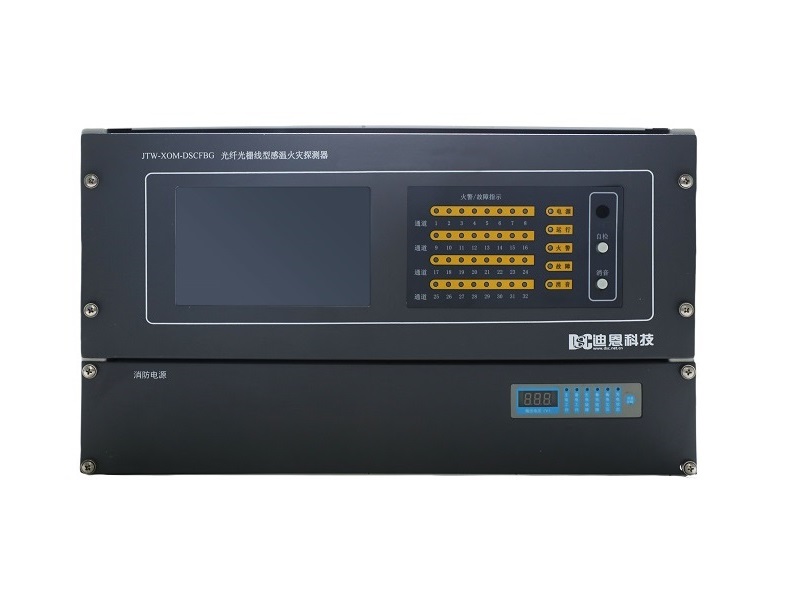
High precision and fast response. Each FBG sensing point reports a calibrated temperature value, so the system distinguishes a slow environmental drift from a genuine pre-fire heating trend. When an abnormal rise is confirmed, the alarm is raised within seconds, giving staff the earliest possible start on evacuation guidance and firefighting response - the two actions that decide casualty outcomes in crowded venues.
Full coverage of large, complex spaces. The sensing fiber runs along ceilings, cable trays, atrium edges and service corridors, following the building geometry wherever risk concentrates. A single line monitors the whole covered zone without blind corners, which is particularly valuable in large-span halls where point detectors leave gaps between mounting positions.
Maintenance-free and highly reliable. With no electronics at the sensing points, the FBG linear heat detector keeps working through humidity, dust and temperature swings, and needs no periodic recalibration of individual sensing heads. This stability suits the long operating hours of commercial buildings, where detector downtime translates directly into exposed risk.
Typical application scenarios. In practice, FBG linear heat detection is installed above atriums and exhibition halls, along shopping mall ceiling grids, in cinema and theater auditoriums, and inside the building's power distribution rooms - the highest-risk space in any public venue. For dedicated electrical rooms, it is often paired with the fire power supply monitoring host; for cable trenches and ceiling voids, the FBG linear heat detector provides the continuous sensing line that point detectors cannot match.

