This report summarizes the fiber Bragg grating (FBG) sensing system in one place: what it is, how it works, what it is built from, where it wins, and where it is heading. FBG sensing measures physical quantities such as temperature, strain and pressure with high precision by converting changes in the fiber's refractive index and grating period into shifts of the Bragg wavelength - an optical encoding that gives the technology its signature advantages.
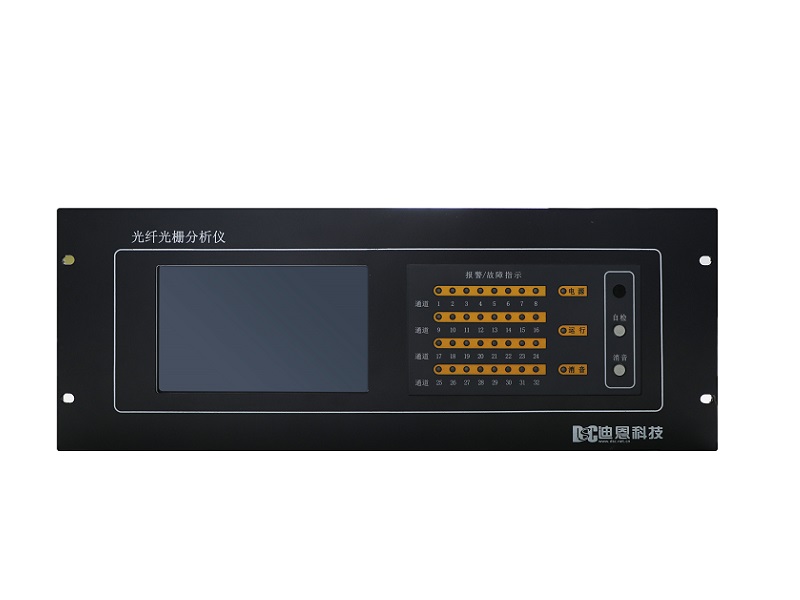
System composition. Four blocks form every FBG system. The system source provides optical energy, typically a broadband source or a wavelength-specific laser. The sensor or sensor array - multiple gratings multiplexed on one or more fibers - translates the measurand into wavelength shifts. The demodulation instrument converts the returned optical signals into electrical or digital data, and the detector stage receives and records the processed signals for display and analysis.
Working principle. When temperature, strain or another physical quantity acts on a grating, it changes both the average refractive index and the grating period, shifting the Bragg wavelength. Measuring that shift per grating yields the physical value at each sensing point - a direct, absolute, drift-resistant encoding that needs no electrical signal in the field.
Performance characteristics. FBG systems combine high precision with passive, interference-free sensing: the sensors are small, lightweight, corrosion-resistant and immune to electromagnetic disturbance, support true multi-point quasi-distributed measurement over long fiber runs, and remain stable through years of unattended service.
Application landscape. Industry uses FBG systems for machinery, process and product-quality monitoring; meteorology and oceanography for environmental observation; healthcare for devices and diagnostics; and the energy sector for monitoring across oil, gas and nuclear production and transmission, with additional use in scientific research, aerospace and transportation. In infrastructure, the FBG structural monitoring system and the grating-array shaft and guide-rail deformation monitoring system are the flagship deployments, with the DSC-FBG-XA fiber Bragg grating analyzer as the standard interrogation instrument.
Trends and conclusion. Development is pushing toward higher precision, wider application, smaller footprints and greater intelligence as demodulation electronics and analytics advance. As these trends continue, FBG sensing systems will keep expanding from niche instrumentation into mainstream monitoring infrastructure - and engineering teams that master the wavelength-encoded measurement principle will be best positioned to exploit it.

