The fiber Bragg grating CO sensing system extends FBG technology from physical quantities into gas detection: a carbon-monoxide-sensitive coating applied over the grating converts CO concentration into a wavelength shift, giving industry a CO monitor with no electrical parts in the sensing zone. That combination - intrinsic safety plus optical precision - is what makes it attractive for industrial safety and environmental monitoring.
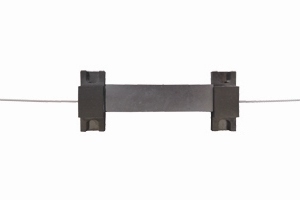
System overview. The system uses an FBG sensor whose surface carries a CO-sensitive material. When carbon monoxide contacts the coating, the material's refractive index or volume changes, shifting the grating's Bragg wavelength. Tracking that shift yields a real-time CO concentration measurement - the same wavelength-encoding principle used for temperature and strain, applied to chemistry.
System composition. Four blocks form the system: the FBG sensor with its sensitive coating as the core element; a stable light source, typically wideband or a specific-wavelength laser; a signal demodulator that converts the returned optical signal into electrical or digital data; and a data acquisition and processing system that turns demodulated data into concentration readings, trend records and alarm decisions.
Performance advantages. The system offers high sensitivity to low CO concentrations, selectivity from the chemistry of the sensing coating, and complete immunity to electromagnetic interference - important in the noisy electrical environments where CO monitoring matters most. Because the sensing zone carries no current, the system is intrinsically safe for hazardous locations, and the fiber path supports genuinely remote monitoring from a safe distance.
Application fields. Typical deployments include industrial safety monitoring in mining, chemical plants and enclosed equipment spaces; environmental monitoring of air quality around combustion sources; and integration into facility safety platforms where CO readings join temperature and gas-detection channels. For the wider FBG hardware platform, the DSC-FBG-XA fiber Bragg grating analyzer provides interrogation, and the FBG structural monitoring system shows the same wavelength-encoding architecture applied at infrastructure scale.
Development trends. CO sensing on FBG platforms is advancing toward higher sensitivity, higher selectivity and more stable coatings, while IoT integration adds remote monitoring and intelligent early-warning capabilities. As the coating chemistry matures, FBG gas sensing will extend to a wider family of target gases on the same optical infrastructure.

