The cascaded fiber Bragg grating sensing system is the architecture that gives FBG technology its scaling advantage: multiple gratings written along a single fiber, each assigned a distinct wavelength, all interrogated simultaneously. One fiber line, one interrogation channel - dozens of measurement points for temperature, strain and other quantities. This article explains how cascading works and where it pays off.
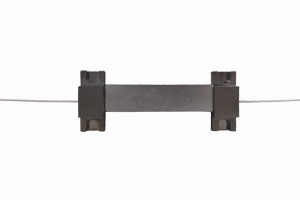
System composition. Four blocks form the system: a broadband light source supplying the interrogation spectrum; the cascaded FBG sensor array with its wavelength-separated gratings; the signal demodulation system converting stored wavelength information into electrical signals; and the data processing unit that turns demodulated signals into per-point measurement records and analysis.
Working principle. Each grating in the cascade is fabricated with a different center wavelength, so their reflections occupy non-overlapping spectral slots. When a physical quantity changes at any grating, its reflection shifts while the others stay put - and the demodulator tracks all shifts in parallel. The one-to-one correspondence between wavelength shift and measurand is preserved per grating, giving every point on the line its own independent, calibrated measurement.
The multiplexing advantage. Cascading eliminates the per-point wiring that dominates conventional sensor installations: adding measurement points means writing more gratings at different wavelengths, not running more cables. Installation cost per point drops sharply, the fiber run stays passive and interference-free, and a single interrogation channel - such as one channel of the DSC-FBG-XA fiber Bragg grating analyzer - serves the entire array.
Applications. Civil structures use cascaded arrays to instrument bridges, dams and buildings with dense temperature and strain grids; aerospace applies them to structural monitoring of aircraft and rockets; and petrochemical and power industries deploy them for multi-point, multi-parameter distributed measurement along pipelines, tanks and switchgear - including the FBG-based switchgear temperature online monitoring system and the FBG structural monitoring system.
Development trends. Higher precision, stronger interference immunity and wider application coverage continue to advance, and micro-nano fabrication is pushing sensor miniaturization and integration - extending cascaded FBG sensing to denser arrays on longer lines.

