What can a fiber Bragg grating sensing system actually measure? Far more than the temperature and strain it is famous for. Through direct wavelength encoding and through engineered transducer designs, FBG platforms cover a wide family of physical quantities - this article lists them and shows where each measurement earns its place.
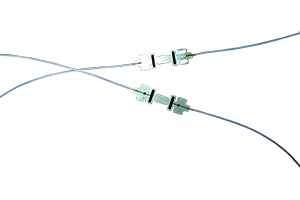
The primary three. Temperature: high-precision wavelength-encoded measurement, applicable wherever thermal monitoring matters - from switchgear to structures. Strain: the FBG's native sensitivity, and the basis of structural health monitoring and material stress analysis. Pressure: specialized transducer designs convert pressure into wavelength shift, serving pipelines, storage tanks and process equipment.
Derived mechanical quantities. Displacement is recovered indirectly, by measuring the strain field related to the displacement. Acceleration is measured by FBG accelerometers built on the grating's vibration response - used in structural dynamics and seismic applications. Vibration itself is measured directly with high-frequency FBG arrays.
Electrical and other quantities. With special transduction, FBG systems measure voltage and current through the electrostrictive or thermal effects they produce; magnetic field, frequency, concentration and thermal expansion coefficient are similarly accessible through engineered sensing coatings and mechanics. The measurand list keeps growing as transducer designs mature.
Why one platform covers many measurands. Every FBG measurement reduces to the same operation - tracking a wavelength shift - so adding a new quantity means adding a transducer, not a new instrument chain. That is why a single interrogation platform, such as the DSC-FBG-XA fiber Bragg grating analyzer, serves temperature, strain, pressure and vibration channels simultaneously, and why deployed systems scale across fields so economically.
Where the quantities matter. Aerospace, petrochemical, rail transit and large bridge and building health monitoring all run FBG measurement in production today. As precision, range and interference immunity keep improving, the measurable list - and the deployment footprint - will keep expanding. The FBG structural monitoring system and the grating-array shaft and guide-rail deformation monitoring system are production examples of multi-quantity measurement at infrastructure scale.

