Choosing between the two main families of linear heat detectors - fiber-type and cable-type - is the central purchase decision in linear fire detection. Both monitor environmental temperature change to detect fire, both cover large continuous areas in large buildings, tunnels and warehouses, but they differ in sensitivity, precision, cost and installation profile. This article gives the comparison and the selection framework.
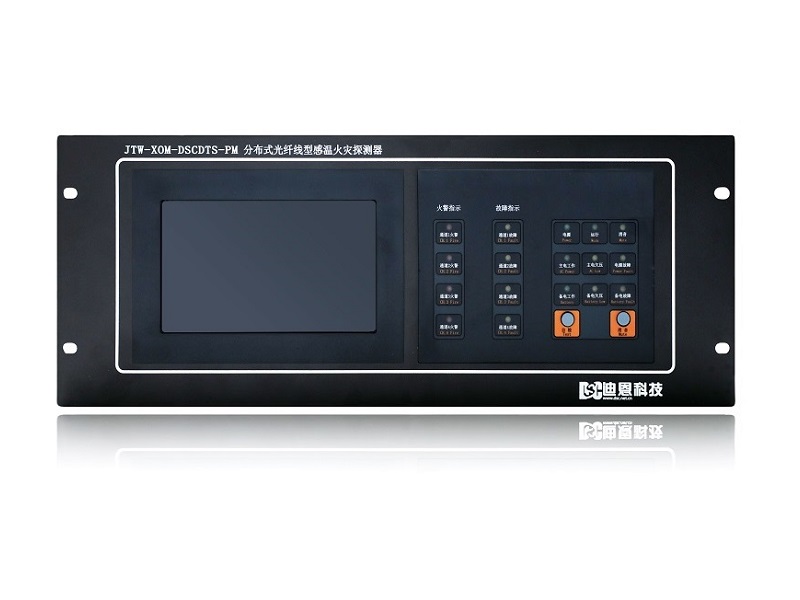
Shared working principle. The core of any linear heat detector is a sensing line laid along the protected area, sensitive to temperature change. When the ambient temperature crosses the preset threshold, the line signals the control unit, which triggers the alarm system. Advanced models also report the exact position along the line, enabling rapid fire-source location - a capability that transforms response times in long facilities.
Fiber-type linear heat detectors. These use optical fiber as the sensing element, and the physics gives them the edge in performance: continuous temperature profiling along the whole line, higher sensitivity and precision, exact location of every hot point, complete immunity to electromagnetic interference, and kilometers of coverage from one interrogation unit. They suit tunnels, metro lines, cable galleries and industrial plants where precision and distance matter - the distributed fiber optic linear heat detector (10 km wall-mounted type) and the FBG linear heat detector are production examples, deployed in schemes such as the metro linear fire detection system.
Cable-type linear heat detectors. These use special thermosensitive cable as the sensing element. Their advantages are cost - significantly lower for short runs - and simpler installation and maintenance, which fits small and mid-size buildings and budget-driven projects. Their trade-off is measurement granularity: they respond to threshold crossings rather than providing continuous temperature profiles.
Selection framework. Three questions decide the choice. How long is the protected line? Beyond a few hundred meters, fiber economics win. How precise must detection and location be? Critical infrastructure needs fiber's continuous profiling and exact position. How harsh is the environment? Electromagnetic noise, dust and corrosion all favor the passive fiber line. In every case, installation and maintenance should be performed by professionals following the manufacturer's guidance - the reliability of either family depends as much on installation quality as on the hardware itself.

