The linear heat detector market divides into three structural families - cable-type, air-tube-type and distributed fiber-optic - and matching the family to the application is what separates a protection scheme that works from one that merely exists. This article explains the three types, their working principles and the selection and installation guidance that makes the choice pay off.
Working principle shared by all. The detector monitors environmental temperature change to detect fire: the sensing line - cable, air tube or fiber - responds when the ambient temperature crosses the preset threshold, the signal travels to the control unit, and the control unit triggers the alarm system for a timely fire alert.
Cable-type linear heat detector. Composed of the sensing cable and a signal processing unit, with two mutually insulated metal conductors inside the cable. When the ambient temperature rises enough, the insulating material between the conductors melts, the conductors short at that point, and the alarm triggers. It is the robust, cost-effective workhorse for fixed-threshold detection over moderate distances.
Air-tube-type linear heat detector. Uses a special air tube as the sensing element, responding to the rate of temperature rise: rapid heating expands the tube's air faster than the vent can release it, and the resulting pressure actuates the alarm contact. It favors fast-developing fires and tolerates slow ambient drift well.
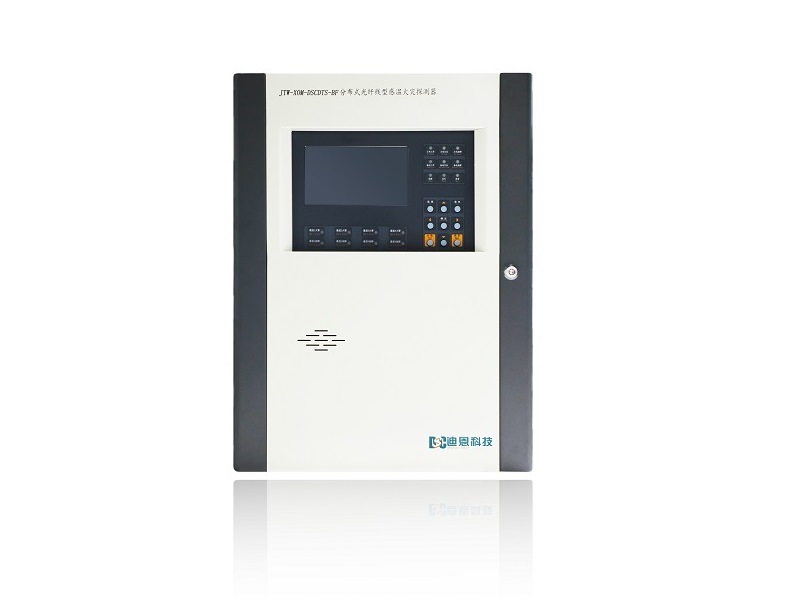
Distributed fiber-optic linear heat detector. The fiber is the sensor, and the interrogation unit profiles temperature continuously along the whole line - with exact location of every hot point, kilometers of coverage, and complete electromagnetic immunity. It is the choice for tunnels, metro systems, cable galleries and long industrial assets, deployed as the 10 km wall-mounted linear heat detector, the 3 km cabinet type and the FBG linear heat detector, and packaged into application systems such as the tunnel linear heat detection system and the coal conveyor belt temperature early warning system.
Selection and installation guidance. Choose by three criteria: the application scenario and its fire-development character (fast fires favor rate-of-rise designs; long lines favor fiber), the budget envelope (cable-type minimizes short-run cost; fiber minimizes cost per protected meter at distance), and installation and maintenance convenience. Whatever the type, installation must be performed by professionals following the manufacturer's guidance, and the detector needs periodic inspection and maintenance to stay in proper working condition - the high sensitivity, reliability, adaptability and easy maintenance that linear heat detection promises are realized only through correct selection, professional installation and disciplined upkeep.

