A linear heat fire detector detects fire by watching temperature continuously along its run: a thermosensitive element monitors the environment in real time, an alarm is raised at the earliest abnormal rise, and the fire is intercepted before it develops. This article explains the working principle, the detector classification, the installation and commissioning requirements - the full picture of how linear heat detection delivers early fire discovery.
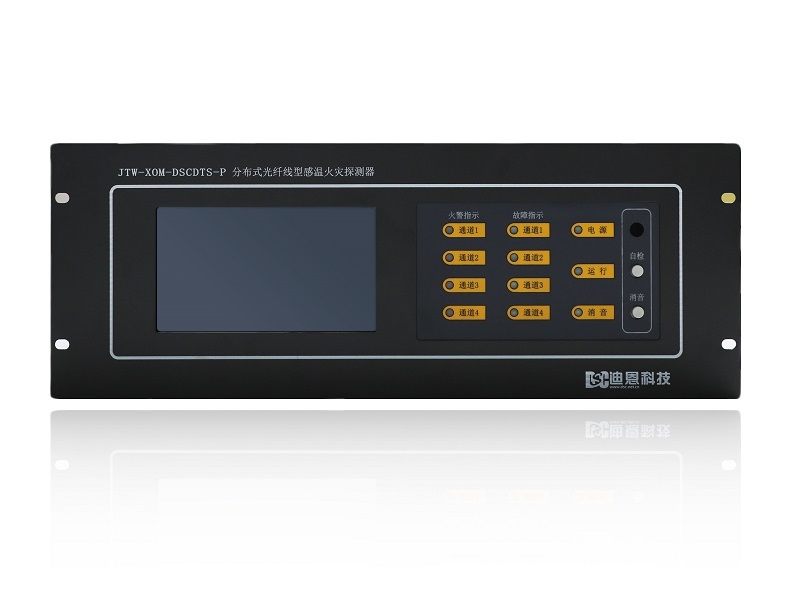
Working principle. The detection chain rests on the thermosensitive element's response to environmental temperature. As temperature rises, the element's resistance changes and produces a corresponding electrical signal. The signal processing unit receives the signal, applies its processing algorithms to decide whether a fire exists, and outputs the fire signal; the alarm unit then actuates the alarm devices in response.
Classification. Detectors divide by principle and application. The cable-type fixed-temperature detector uses the resistance change of thermosensitive cable: when the ambient temperature reaches the preset threshold, the cable's resistance drops sharply and the alarm triggers. Differential designs add rate-of-rise evaluation; fiber-optic designs - the distributed fiber optic linear heat detector and the FBG linear heat detector - measure temperature continuously along the line and report the exact position of every event.
What the detection delivers. Real-time temperature surveillance along a continuous line closes the gaps that point detectors leave, catches fire hazards at the heating stage, and provides early warning that directly protects life and property in the facility's highest-risk linear spaces.
Installation and commissioning. Installation and commissioning must follow the applicable codes and standards. During installation, the detector's position, spacing and fixing method must meet the design requirements; during commissioning, the alarm function and the fault-alarm function must both be tested to confirm the detector works as specified before handover.
Summary. By monitoring environmental temperature change in real time, the linear heat fire detector discovers fire hazards early - an important fire detection device whose early warning gives life and property the protection it promises, when installed and commissioned to standard.

