How does a fire detector decide what to watch - smoke, temperature, flame or gas? The answer defines its strengths and its blind spots, and the fire detector selection logic behind it is what this article sets out: principle by principle, with the scenarios each detector family fits and the selection criteria that close the decision.
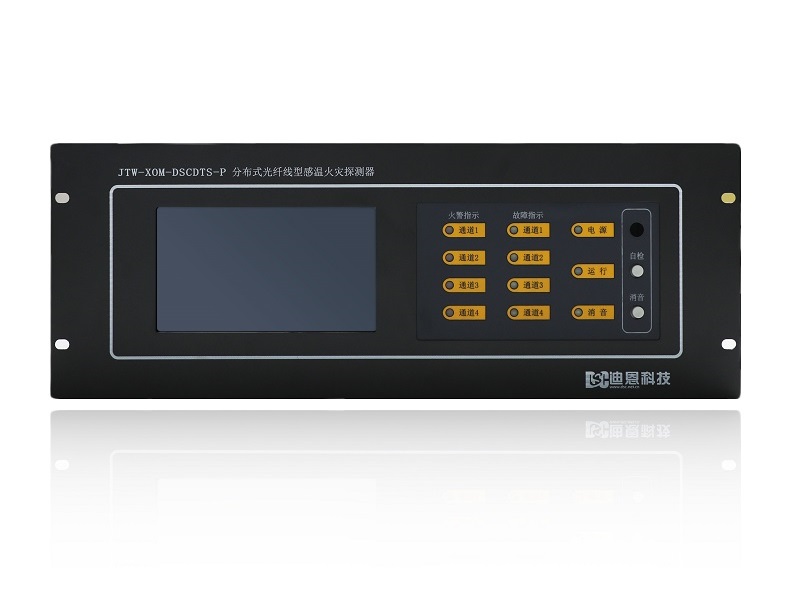
Heat detection. Heat detectors watch temperature and its rate of rise through thermosensitive elements: when the environment reaches a threshold - or rises abnormally fast - the alarm triggers. The principle is slow but certain: few nuisance sources move temperature the way fire does, which is why heat detection anchors dusty, steamy and industrial spaces. The linear format extends it along a line - the FBG linear heat detector and the distributed fiber optic family watch cable galleries, tunnels and conveyor lines continuously.
Smoke detection. Smoke detectors sense combustion particles, typically by optical analysis of scattered light. Smoke appears at the fire's earliest stage, so smoke detection usually wins the race for early warning in offices, hotels and shopping centers - provided the environment is clean enough that dust and steam do not impersonate smoke.
Gas detection. Gas detectors serve premises where combustible gas and vapor can accumulate, and premises where carbon monoxide can develop - detecting the hazard before combustion rather than after, an earlier and chemical-specific layer that heat and smoke detection cannot provide.
Compound detection. When a detection zone warrants multiple sensors, compound fire detectors with combined judgment functions evaluate several signatures at once - the strongest configuration for complex, high-value spaces, cutting false alarms while keeping early warning.
The selection criteria. Four checks close any selection: what does the space's fire actually produce first - smoke, heat, gas?; what interferes with each principle in this environment - dust, steam, EM noise?; what response time does the risk demand?; and what reliability does the operation require? Answering these four, scenario by scenario, places each detector family where its principle is strongest - and that is how fire detection stays accurate and timely.

