Smoke detectors and heat detectors are the two workhorses of fire detection, and they differ fundamentally in principle, sensitivity and application. Choosing between them - or combining them - is one of the most consequential decisions in fire system design. This article gives the full comparison and the selection guidance for public buildings.
Working principle. Smoke detection works by sensing smoke particles: it collects particles from the air and analyzes them optically to judge whether fire exists. Heat detection works on temperature change: a thermosensitive element triggers the alarm when ambient temperature reaches a set value or rises at an abnormal rate.
Sensitivity. Smoke detectors are generally more sensitive: smoke particles are an early and distinctive fire signature, so smoke detection tends to catch fires earlier. Heat detectors respond relatively later, because they wait until the fire has raised the temperature - or the rate of rise - to the alarm threshold.
Application scenarios. Smoke detection suits spaces where early fires produce abundant smoke: office buildings, hotels, shopping malls. Heat detection suits spaces where temperature rises readily, and where smoke detection would false-alarm: kitchens, industrial production lines, and sites with heavy dust, high humidity or trapped steam and smoke-vapor interference.
The environments in between. Most real spaces fall between the extremes. Kitchens carry oil fume and steam that defeat smoke detection; dusty warehouses carry the same problem - heat detection wins there. Atriums and clean offices carry neither - smoke detection wins. And spaces with mixed signatures - oil vapor, water vapor, combustible dust - need detectors selected specifically for anti-interference capability.
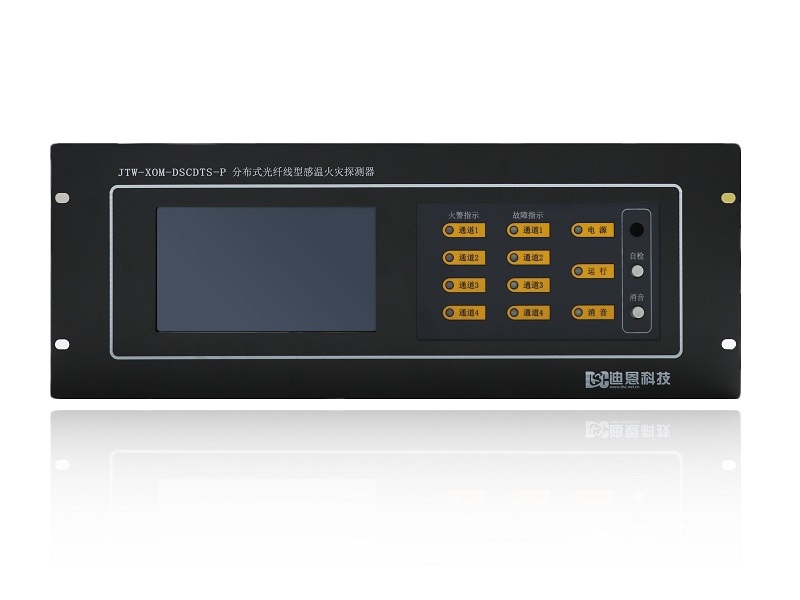
Combining both in large public buildings. Complex premises - large public buildings, comprehensive shopping centers - benefit from running smoke and heat detection together: their complementary strengths raise detection accuracy and reliability across zones whose signatures differ. In the same spirit, linear fiber heat detection extends the heat principle along infrastructure lines, through systems such as the tunnel linear heat detection system and the tank farm fire detection system.
Summary. Smoke and heat detectors each hold real application value in public buildings. Selection should weigh the site's fire-risk characteristics and actual needs - the goal is detection that is accurate and reliable in that specific space, not on the datasheet.

