The Chinese national standard for linear heat fire detectors is GB 16280-2014 - issued on December 31, 2014 and effective from June 1, 2015, published by the General Administration of Quality Supervision, Inspection and Quarantine and the Standardization Administration of China. This article summarizes the standard's scope, main content and what it means for installation practice.
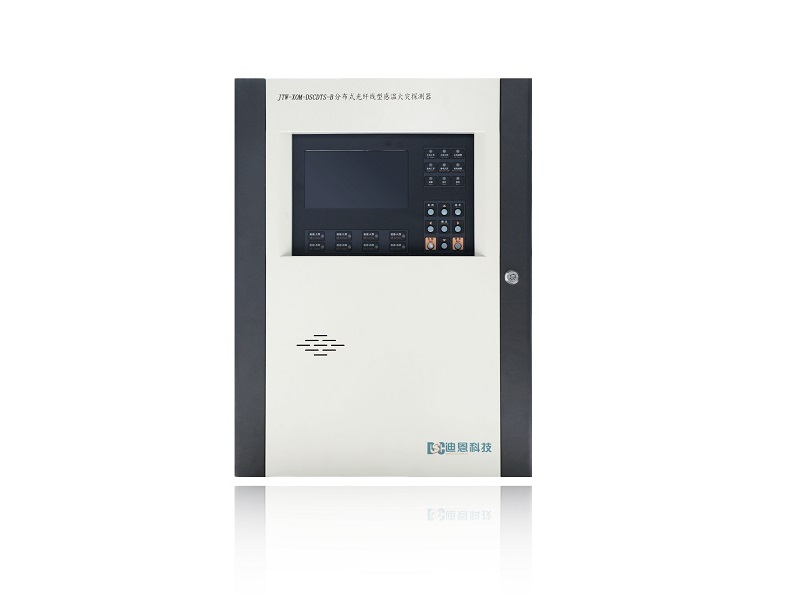
Scope. The standard applies to all linear heat fire detectors installed in industrial and civil buildings: cable-type linear heat detectors, air-tube-type linear heat detectors, distributed fiber optic linear heat detectors, fiber Bragg grating linear heat detectors, and linear multi-point heat detectors - the full family, including the FBG linear heat detector and distributed fiber optic products.
Main content. Five sections structure the standard. Product classification: by sensitive-element form - cable, air tube, distributed fiber, fiber grating and linear multi-point. Technical requirements: action performance, environmental adaptability, interference immunity and electrical safety. Test methods: the procedures that verify each technical requirement. Inspection rules: conformity assessment for production and acceptance. Marking: the product identification requirements that make compliant products traceable.
What compliance means in practice. Specifiers should verify that the detector model carries certification to GB 16280-2014 - the standard's technical requirements are what separate a reliable detection line from a liability. Installers should follow the standard together with the applicable fire codes: fixing must be firm and reliable, so the detector cannot fall or shift during a fire and lose its detection effect.
Maintenance connection. The standard's environmental-adaptability requirements only hold if the detector is maintained: periodic inspection and servicing are essential measures for keeping compliant performance in service.
Summary. GB 16280-2014 is the governing national standard for linear heat fire detectors, covering classification, technical requirements, test methods, inspection rules and marking. Installation should strictly follow this standard and the related fire codes and standards - and for international readers, the standard also serves as a useful technical benchmark against which fiber-based detector families such as the distributed fiber optic linear heat detector are specified and verified.

