The analog cable-type heat detector is a fire detection device built on the resistance-change principle: a sensing cable of special thermosensitive material monitors the surrounding temperature in real time, raising the fire alarm when the measured change reaches the preset threshold. This article covers the principle, the features and the application value.
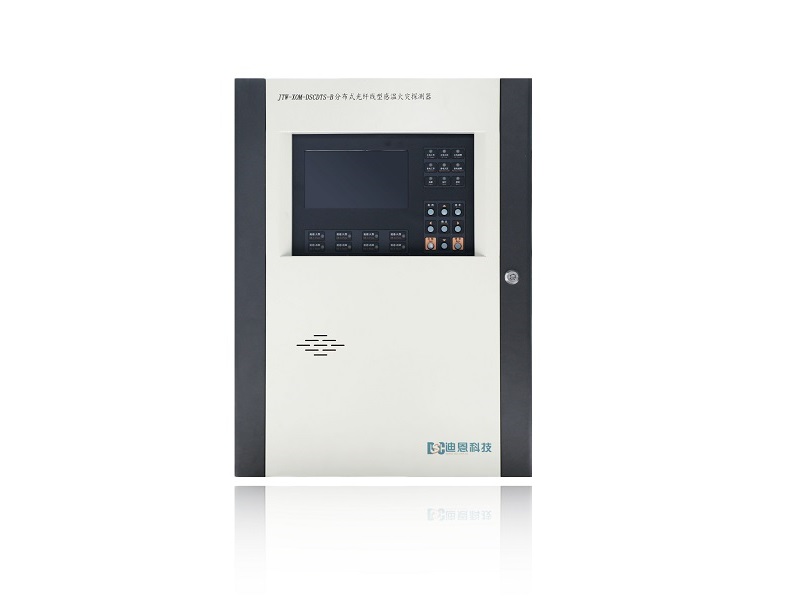
Working principle. The sensing cable contains two or more conductors insulated with special negative-temperature-coefficient (NTC) thermosensitive material, pairwise shorted into one or more monitoring loops. As ambient temperature rises, the thermosensitive material's resistance falls, changing the loop's total resistance. A microprocessor or signal processing unit inside the detector monitors these resistance values in real time - and when the change reaches the preset alarm threshold, the alarm signal triggers. The analog measurement is the design's defining choice: trends are visible before thresholds are crossed.
Features. High precision: the detector monitors minute temperature changes in real time with high measurement accuracy. Programmability: alarm thresholds and response characteristics are configured to the protected scenario rather than fixed at the factory. Resettable operation: the sensing cable recovers after alarms, keeping protection continuous without replacement runs. Long-distance monitoring: one cable line watches the full length of its run - suited to the linear assets conventional detectors cover poorly. And the hardware adapts: working in complex environments - humid, contaminated, dusty sites - with advanced signal processing and reliable sensing elements keeping stability and accuracy high.
Summary. The analog cable-type heat detector is a high-precision, programmable, resettable fire detection device suited to long-distance monitoring - discovering fire hazards through real-time temperature monitoring and providing strong protection for industrial production and public building safety, with the fiber-based linear heat detector family as the upgrade path where continuous temperature profiling is required.

