The development history of the linear heat fire detector reaches back to the late 19th century: from a mechanically triggered heat sensor through the smoke-detection era to today's fiber-optic continuous lines, the technology has matured alongside the science of fire detection itself. This article walks the three eras and the direction ahead.
Early development: late 19th century to mid-20th century. The origin: in 1890, British scientists developed the heat-type fire detector - the beginning of modern fire detection technology. Early heat detectors worked on metal thermal expansion, triggering alarms through mechanical structural change. Application: from the 1840s to the 1940s, heat detectors dominated fire monitoring systems. But the era's technical limits meant low sensitivity and slow response - inadequate for genuine early fire warning.
Technical progress and diversification: mid to late 20th century. From the 1950s, photoelectric technology's advance brought the rise of smoke detection, which took the early-warning lead in clean environments. Heat detection responded by diversifying: thermosensitive cable designs brought the linear format to industrial sites, rate-of-rise logic sharpened response, and electronics replaced the mechanical trigger - the line-sensing concept that linear heat detection institutionalized.
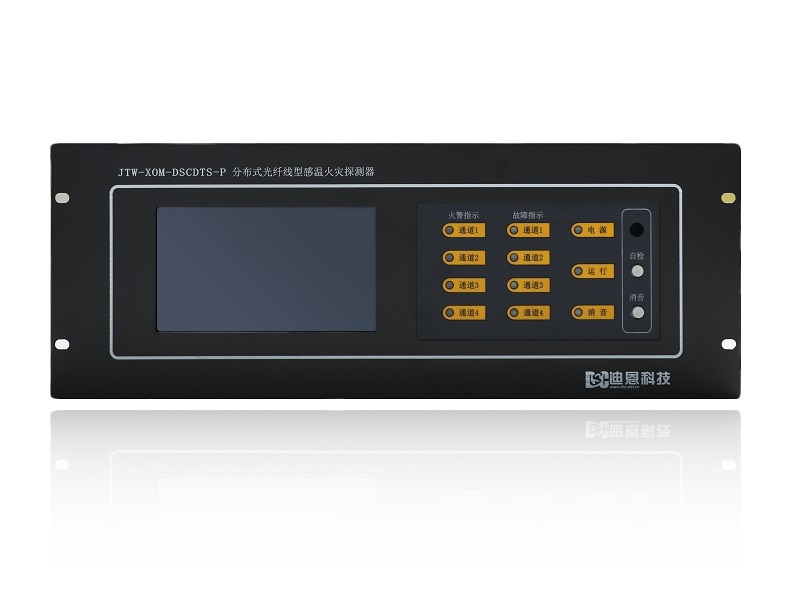
Maturity and wide application: the fiber era. Distributed fiber sensing and fiber Bragg grating technology transformed the linear heat detector: continuous temperature profiling along kilometers of passive glass, exact position reporting, electromagnetic immunity and intrinsic safety - the current technology frontier embodied in the distributed fiber optic linear heat detector and the FBG linear heat detector.
The direction ahead. High precision, high sensitivity, multi-function, integration, intelligence and networking - and interconnection with other fire equipment and systems for more efficient fire prevention and emergency response - are the important development directions ahead.
Summary. The linear heat fire detector's history runs from the origin of heat detection, through technical progress and diversification, to maturity and wide application - and as technology and application requirements keep rising, the trajectory continues toward smarter, more integrated fire detection.

