Temperature sensing cable and temperature sensing fiber are two different temperature-sensing technologies that often compete for the same project - and the right answer depends on principle, application, installation and cost. This article compares them directly, so the selection decision rests on facts rather than vendor preference.
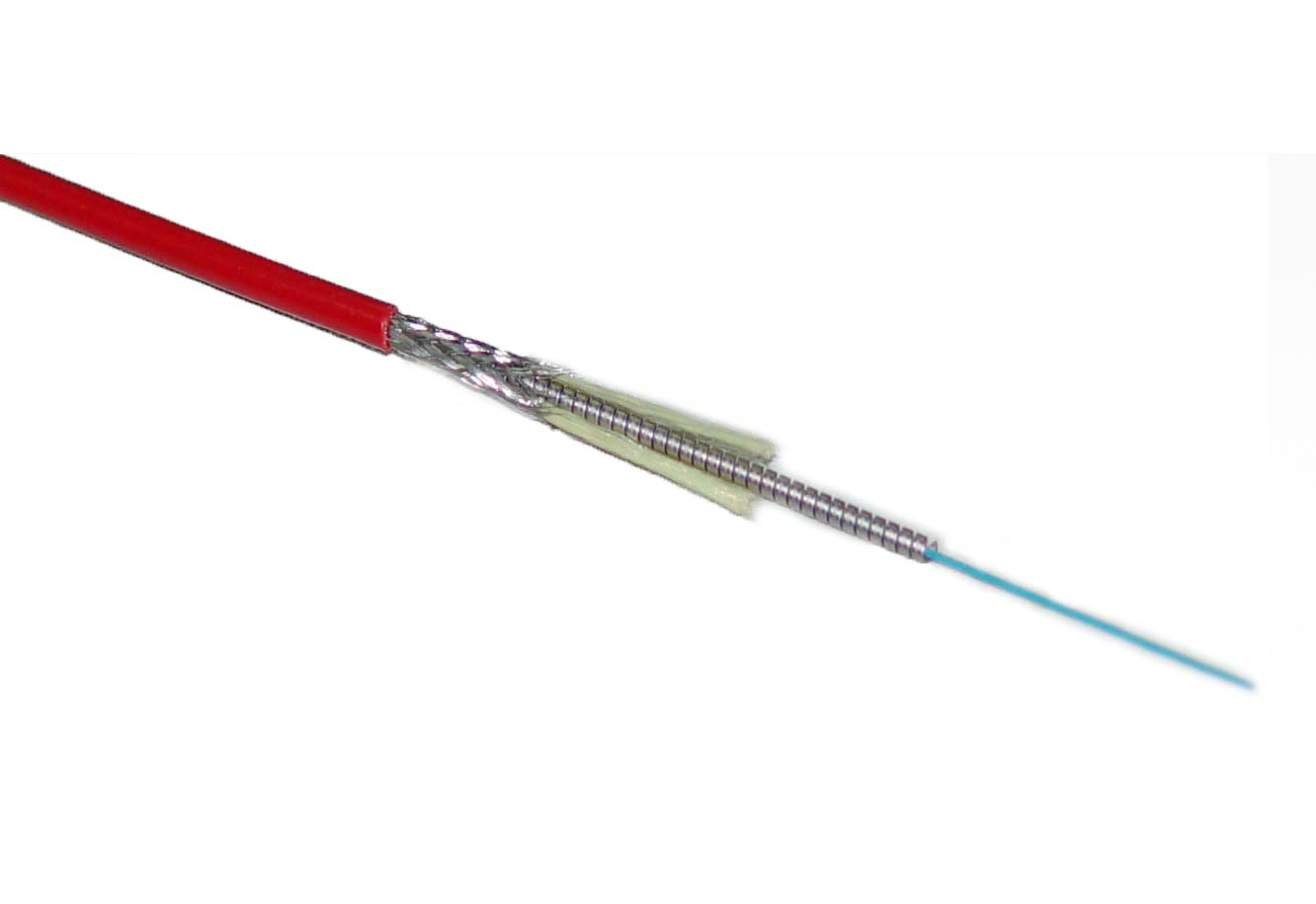
Principle. Sensing cable is based on temperature-sensor characteristics: it converts temperature into an electrical signal through resistance change. Inside the cable are positive-temperature-coefficient (PTC) or negative-temperature-coefficient (NTC) resistance wires; when temperature changes, resistance follows, triggering the alarm signal. Sensing fiber uses optical effects - Raman or Brillouin scattering - to measure temperature: laser light through the fiber interacts with molecules, producing scattered light whose properties encode the temperature at the scattering position; demodulating those signals yields precise temperature measurement along the whole line.
Application. Sensing cable, with relatively low cost and simple installation, suits sites requiring large-area monitoring where extreme precision is not critical: warehouses, commercial buildings, factories. Sensing fiber, with high precision, high sensitivity and electromagnetic immunity, suits long-distance, high-precision monitoring in demanding environments - power plants, tunnels, pipelines and industrial process facilities.
Installation and cost. Cable installation follows conventional electrical practice and is straightforward. Fiber installation requires fusion splicing and interrogation electronics, raising both installation and system cost - but one fiber run replaces many cable circuits at distance, which inverts the economics on long lines.
Product families. Sensing fiber divides into distributed fiber optic linear heat detectors and fiber Bragg grating linear heat detectors; distributed fiber optic temperature sensing technology is especially suited to long-distance, high-precision monitoring. Production examples include the distributed fiber optic linear heat detector (3 km cabinet type), the 2.5 km wall-mounted type and the temperature-sensing optical cable product line.
The verdict. For high-precision temperature detection and long-distance monitoring, sensing fiber is the better choice. For cost-sensitive general temperature monitoring, sensing cable remains the economical, practical option. Match the technology to the application requirements, environmental conditions and budget - not to habit.

